Lake Chamo: Ethiopia’s Wild Side

Of Crocodiles, Hippos, and a Tent Too Close to the Water

Between dodging crocodiles, navigating through hippo territory, and having a hyena inspect our tents at night, you’d think nothing else could shake us. But waking up at dawn – without coffee – proved to be the real test of survival. Join us on a raw and wild adventure at Lake Chamo, Ethiopia’s untamed paradise filled with crocodiles, hippos, and unforgettable encounters.

TEXT: Barbera Bosma

PHOTOGRAPHY: Ruben Drenth

& Frits Meyst

Magazine › Ethiopia - Arba Minch & Gamo Highlands Special

BOOARAHHHHUUUUBRUUU. A primal roar jolts me awake—a terrifying sound, somewhere between a lion’s growl and an enormous, bottomless-stomached belch. Darkness presses against my tent. I lie completely still, every nerve tense. Whatever made that sound is too close for comfort.

BOOARAHHHHUUUUBRUUU. There it is again, now on the right. Then—a splash.

Just twenty metres from our tents lie the shores of Lake Chamo, famous for its many crocodiles. I fumble for my phone—4:20 AM. Somehow, I slept like a rock for seven hours.

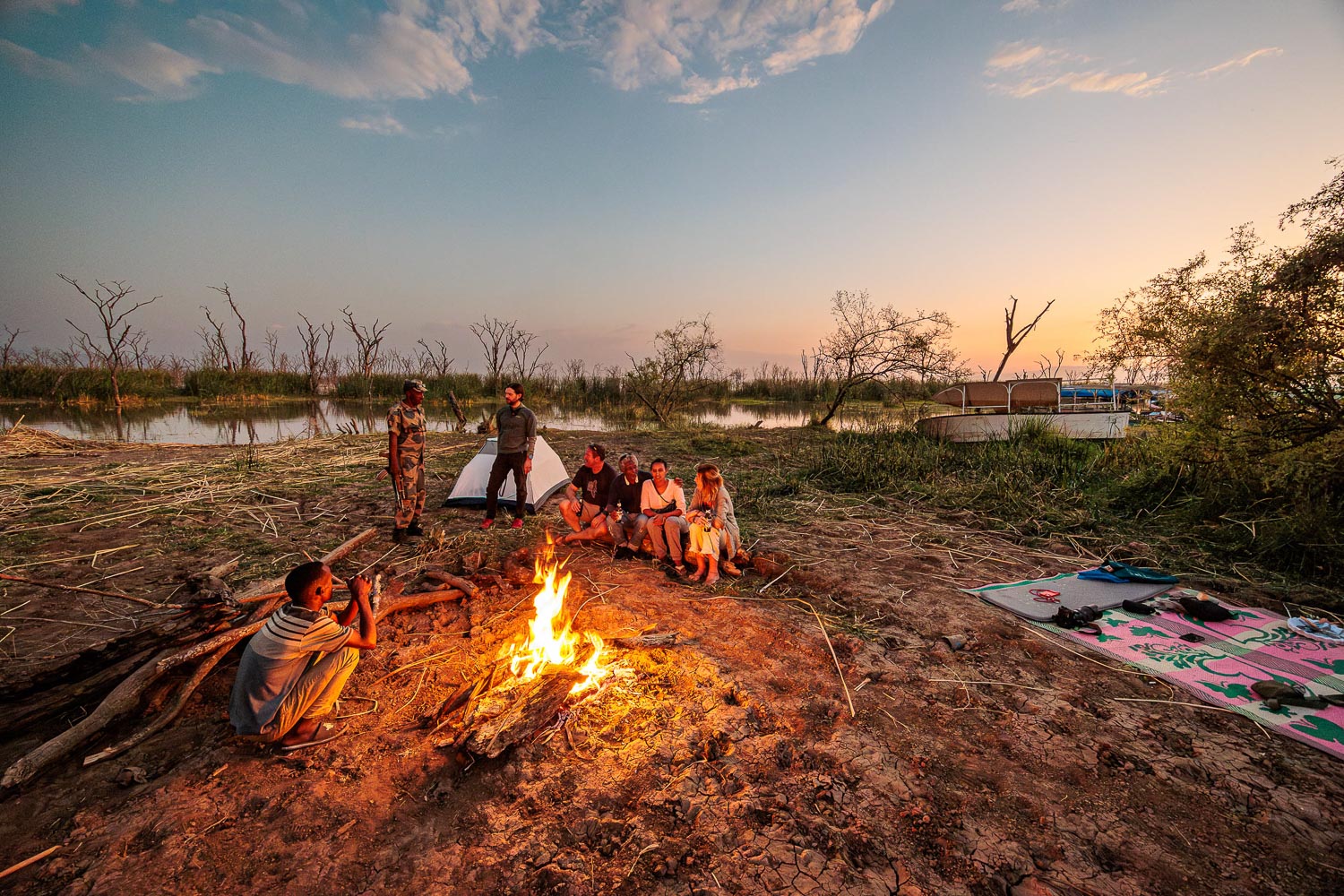
I peer through the mesh of the tent. The campfire, meant to ward off predators, has dwindled to embers. Beside it sits Asnake, our ranger and guardian, his Kalashnikov within reach. Beyond him, I recall the eerie glow of crocodile eyes reflecting in our flashlights the night before.

Just twenty metres from our tents lie the shores of Lake Chamo, famous for its many crocodiles

I unzip a corner of my tent and peek out. The night is so black I can barely distinguish the sky from the earth. Across from me, our bird and camping guide Temesegen ‘Tome’ Amare’s tent is quiet. Then—another growl. I retreat and burrow back into my sleeping bag, strangely invigorated by the proximity of danger. My heartbeat, my breath, the possibility of being torn apart by a crocodile or crushed by a hippo—it’s all exhilarating. At sunrise, in just over an hour, we’ll start a four-hour hike along the river. I close my eyes and fall back asleep. There’s something about sleeping in the wild that settles the soul.

A Prehistoric Landscape

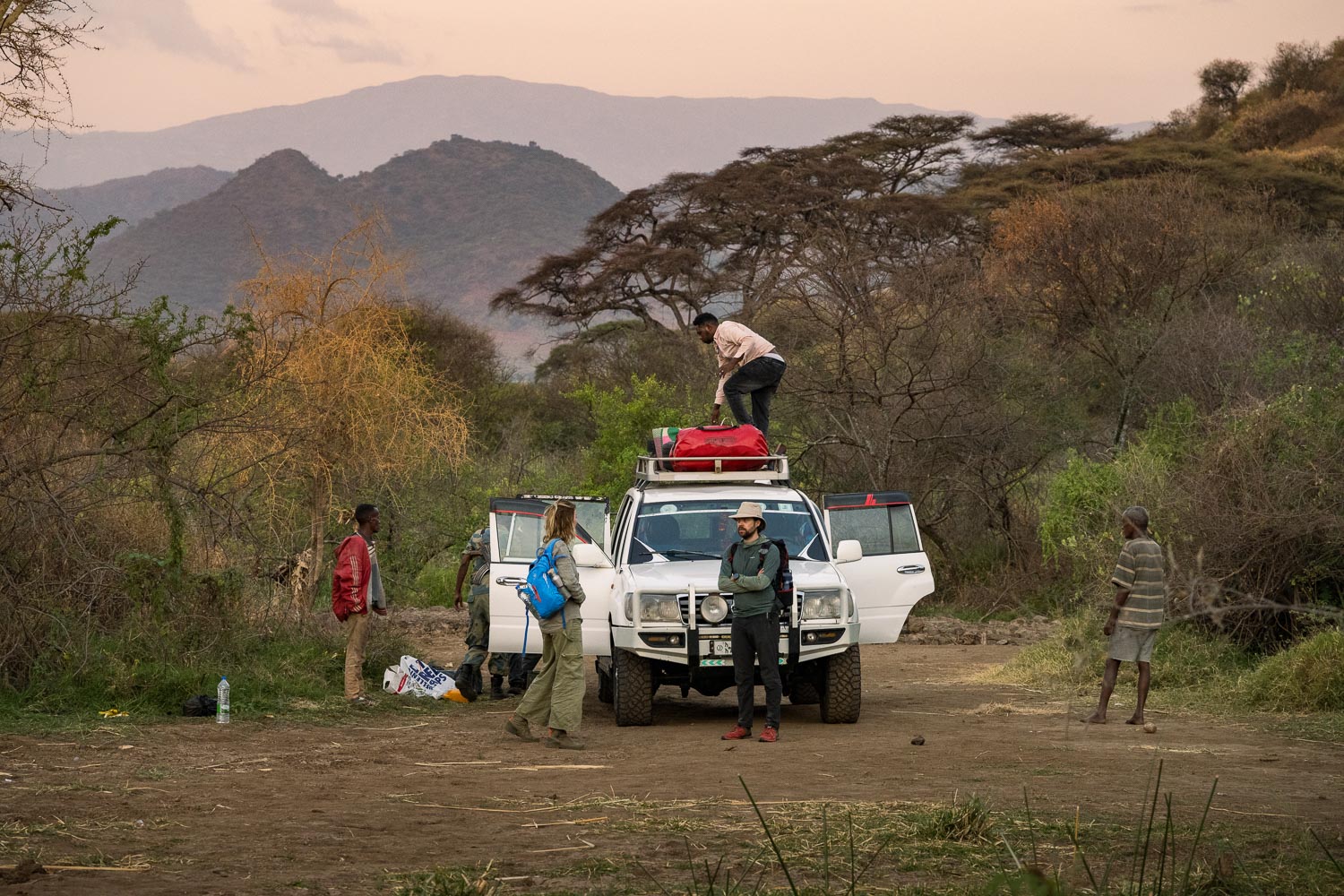
The day before, we arrived at Lake Chamo. Packed into an overloaded minibus—photographer Frits up front, Ruben, Hendrik, and me crammed in the back, our gear strapped to the roof—three men, including Tome and ranger Asnake, sit in the cargo area.

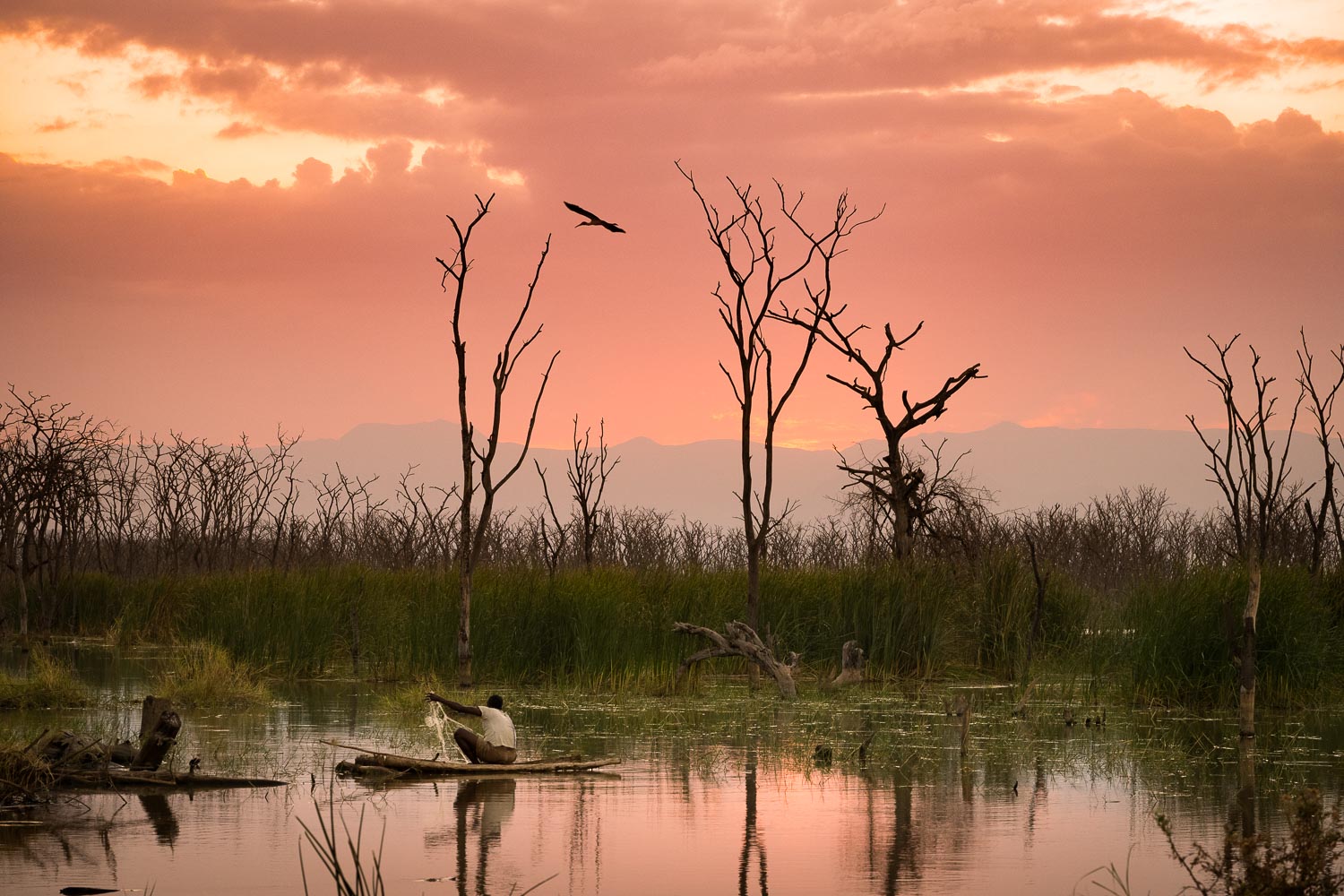
After a half-hour drive, we reach a makeshift jetty. Not long ago, this entire area was submerged—evident in the ghostly feel of the field that will serve as our campsite: a no-man’s land we’re among the first to try out as a wild camping ground. Dozens of metres into the lake, dead trees stand like skeletal sentinels, a shadow theatre, suffocated by years underwater.

Lake Chamo, is located south of Arba Minch, separated from Lake Abaya by a land bridge aptly named ‘God’s Bridge’. Fed by the Kulfo River and the overflow from Lake Abaya, Chamo is one of the Rift Valley lakes – a series of lakes in the East African Rift valley that runs through eastern Africa from Ethiopia in the north to Malawi in the south. The Great Rift Valley of Ethiopia is a region critical to human evolutionary research. Lucy, the 3.2-million-year-old Australopithecus afarensis, was found within its bounds. The lake is part of Nech Sar National Park, home to some 70 mammal and around 340 bird species – the perfect spot for birdwatching and wildlife spotting.

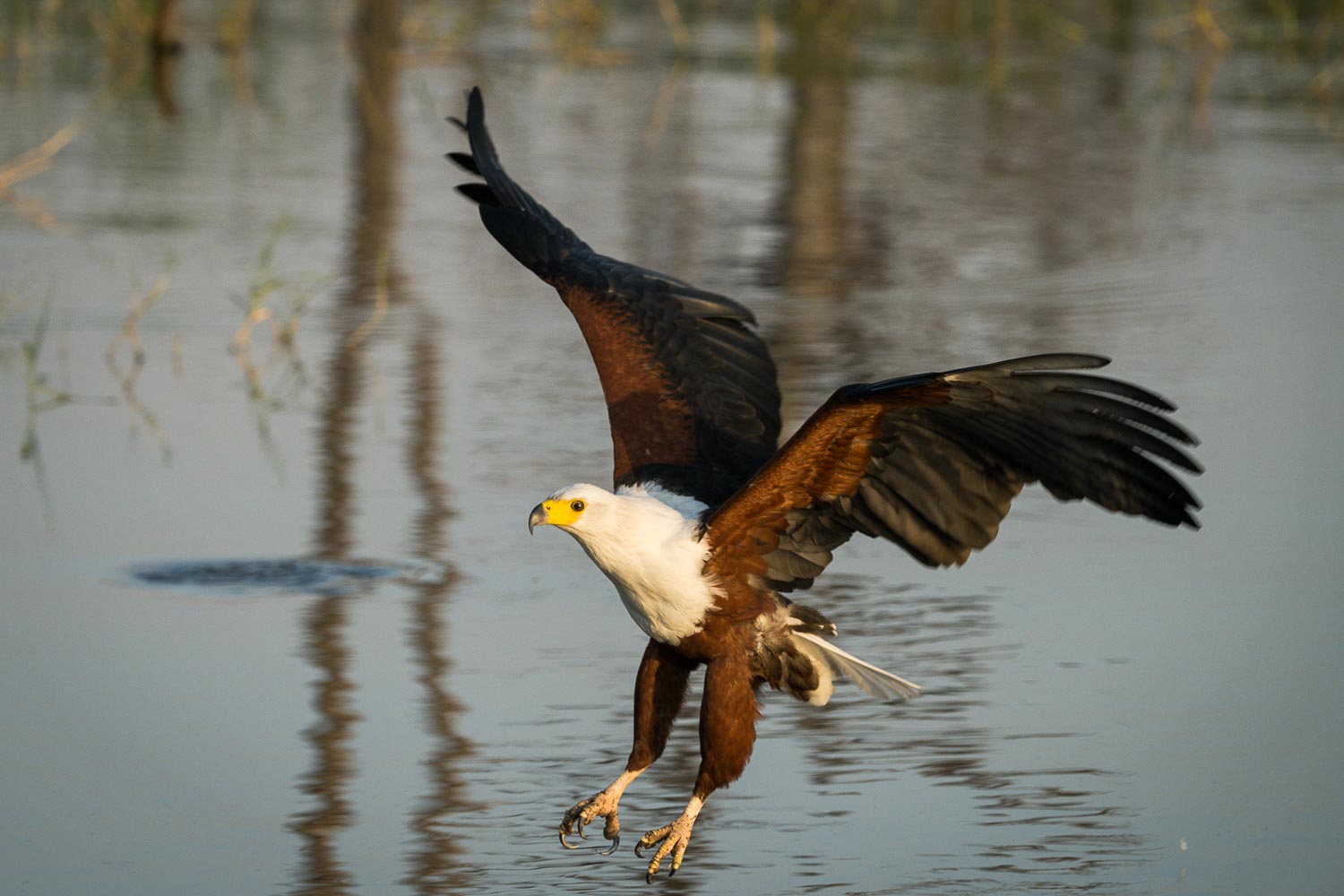
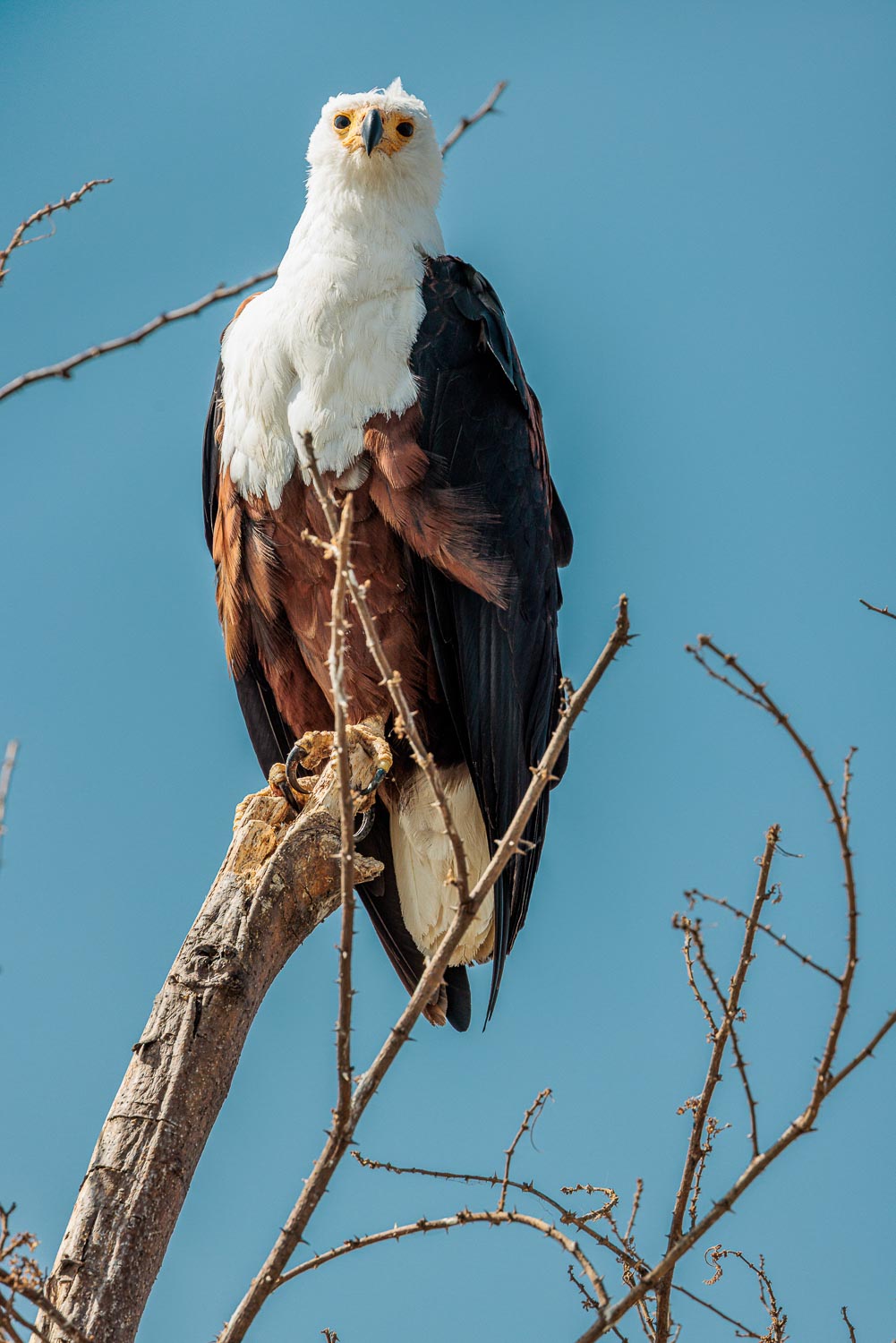
‘The African fish eagle is named after its call. Listen – Afriiii-caaa’

Venturing onto the Water

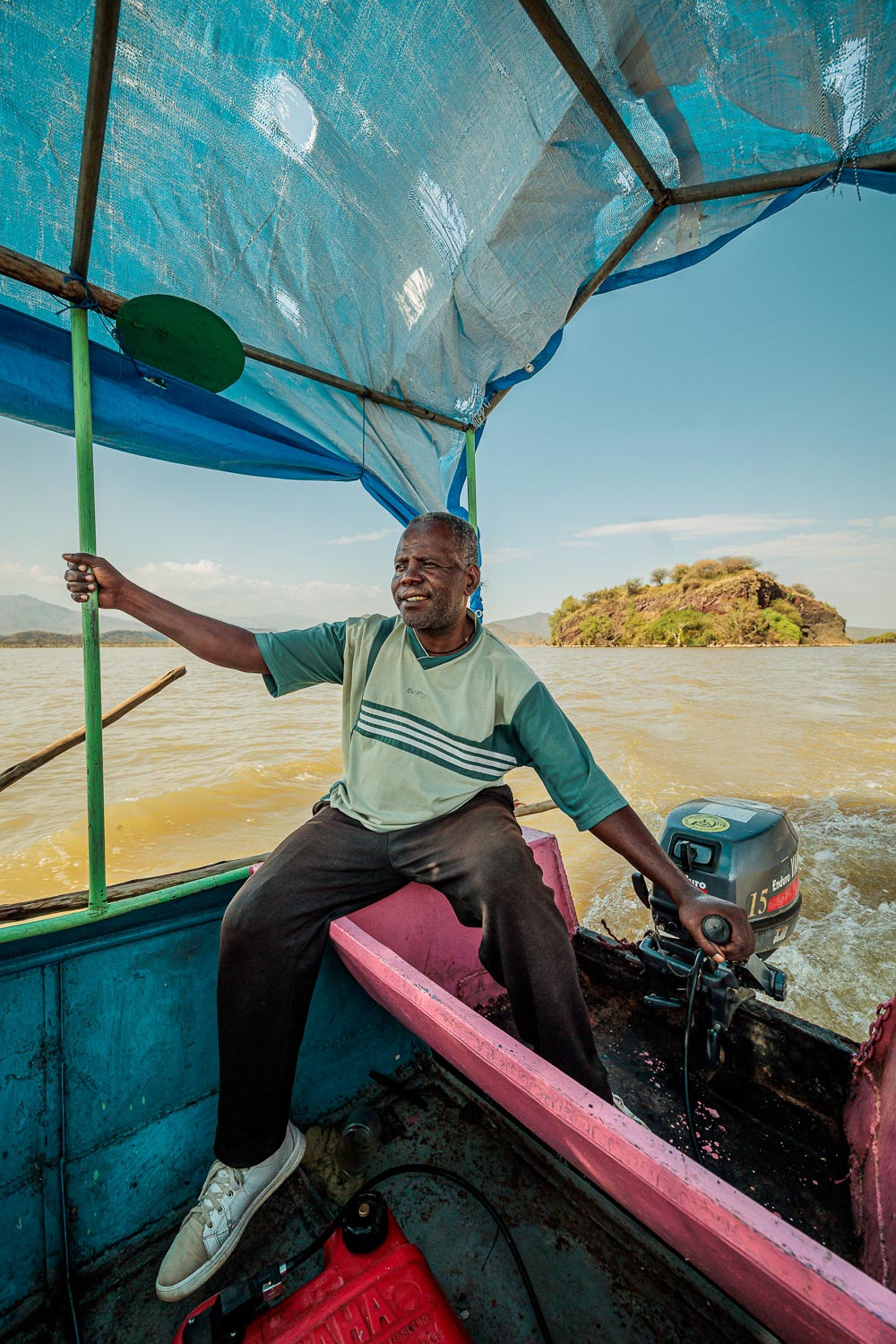
Our boatman, Worku, starts the outboard motor, and we weave through the drowned forest. We pass roofs of what once were facilities built to cater to tourists, now almost entirely swallowed by the rising water. ‘The old parking lot is underwater,’ Tome tells us. Over the past five years, the lake has risen nearly two meters—an undeniable result of climate change.

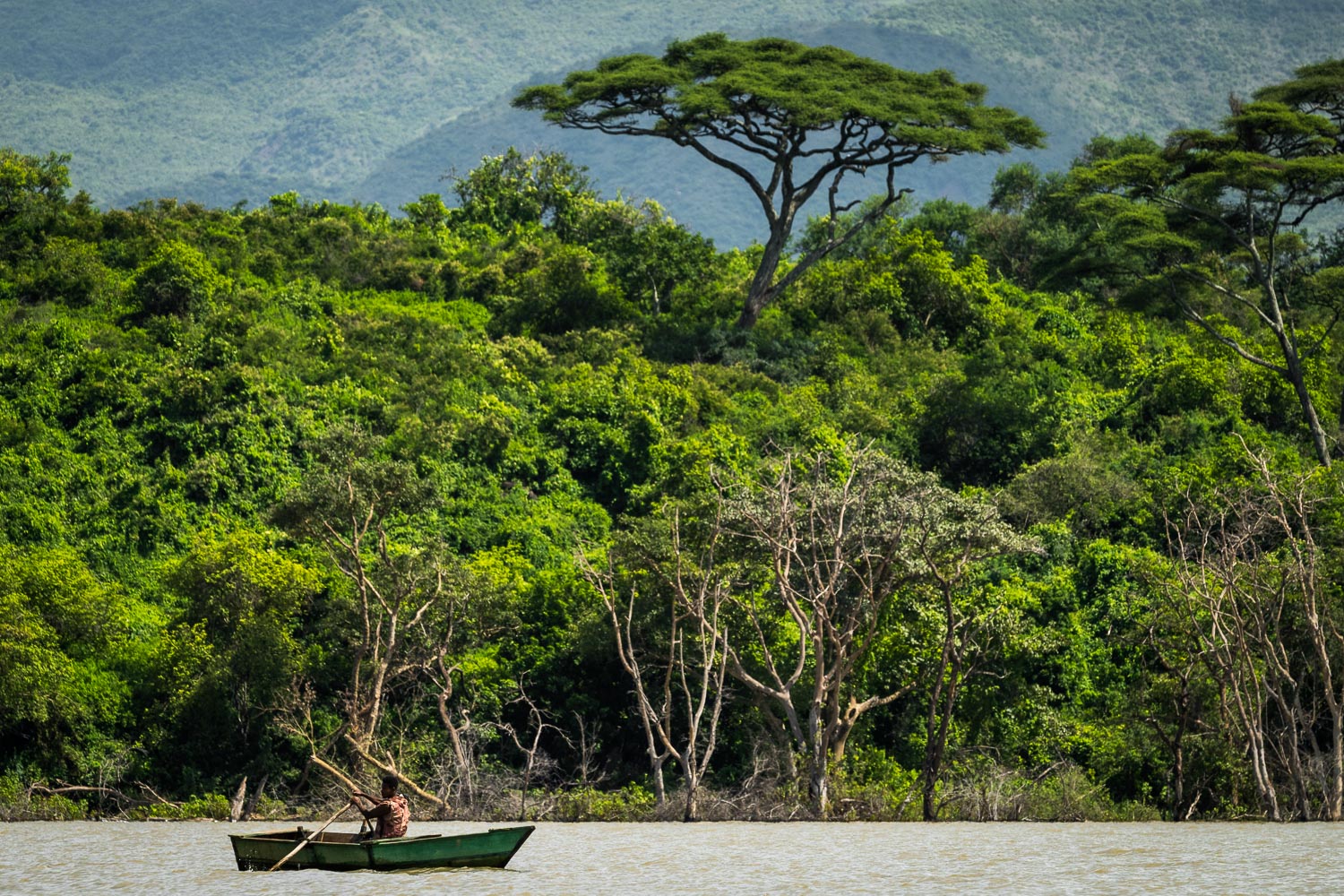
The birds don’t seem to mind. Perched in skeletal trees, African fish eagles eye us regally. Egyptian geese soar overhead. A fisherman hauls in his net from a flat-bottomed boat, barely above the waterline. ‘What do they catch?’ I ask. ‘Catfish, Nile perch, tilapia, electric eels,’ Tome replies, keeping his eye on the sky.

Lake Chamo, 32 kilometres long and 13 wide, is an ecological and economic lifeline. It’s also home to some of the world’s largest Nile crocodiles – four of the six biggest ever recorded live here. Zebras, gazelles, dik-diks, kudus, monkeys, hyenas, and hippos also inhabit the lake’s shores and islands.

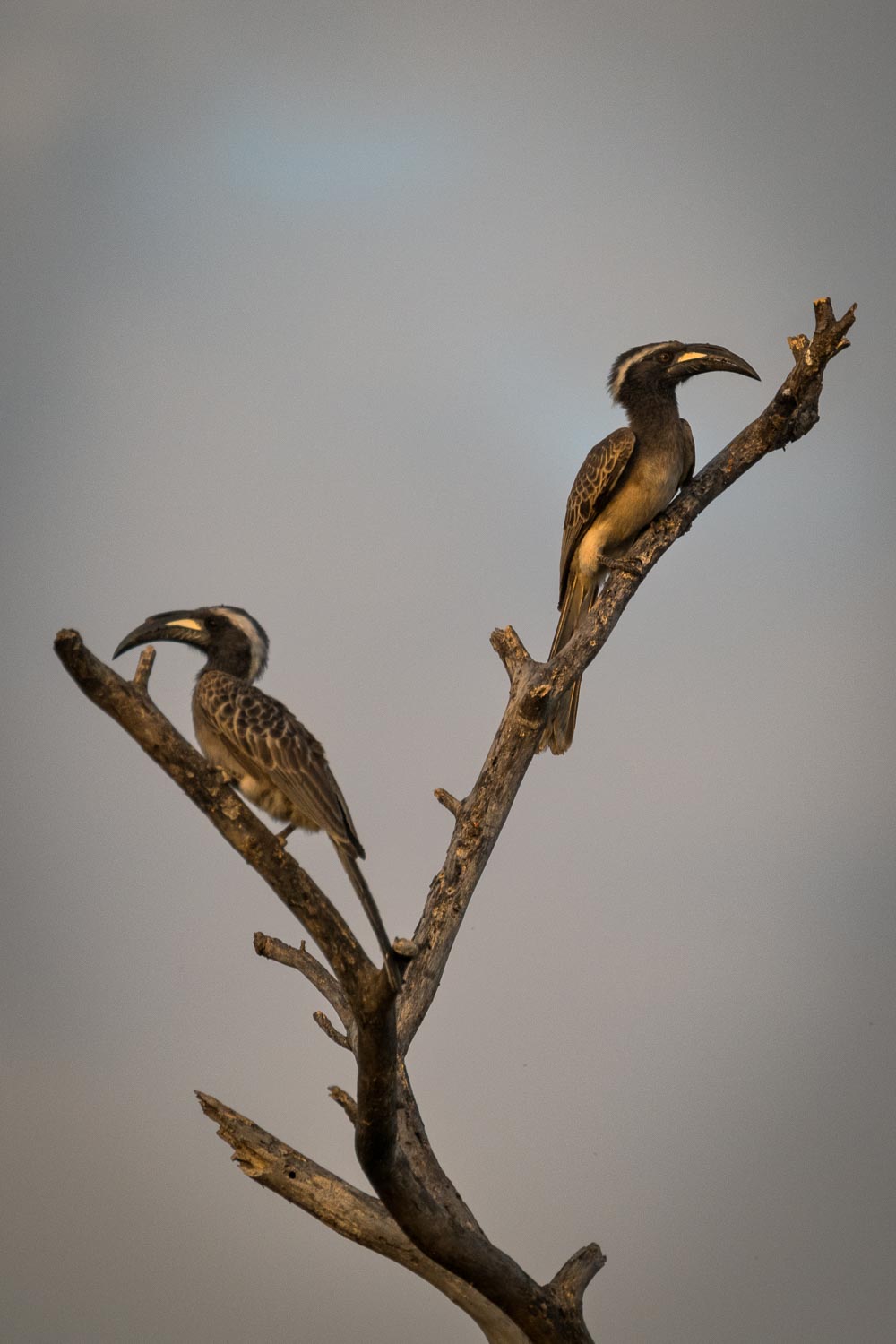
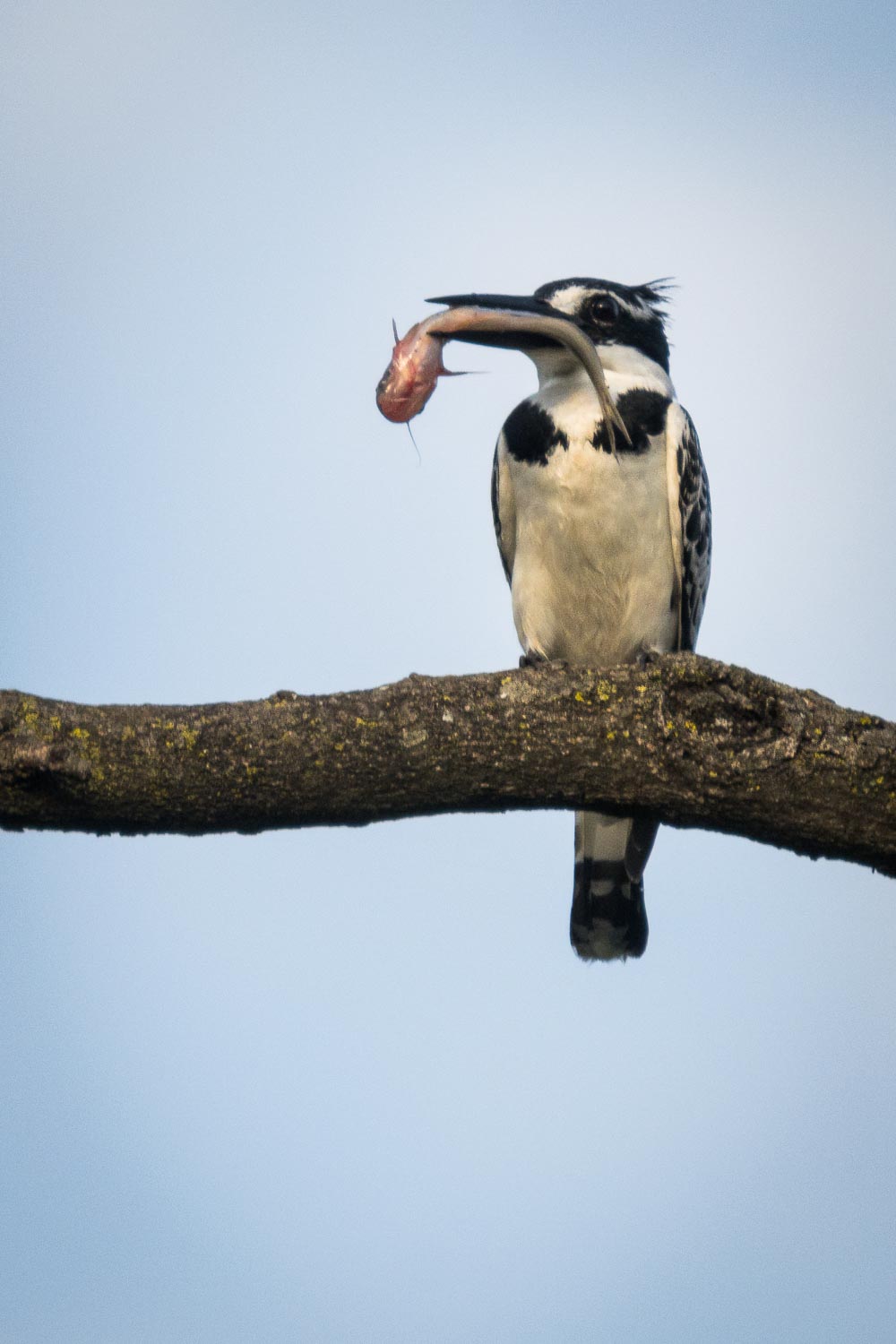
For now, we mostly look up – after all, Tome’s speciality is birds. He points out herons, ibises, kingfishers, yellow- and saddle-billed storks, cuckoo-hawks, marabou storks, and more. ‘The African fish eagle is named after its call,’ Tome explains. ‘Listen – Afriiii-caaa.’

20240525-_DSC9802
Monsters Below the Surface

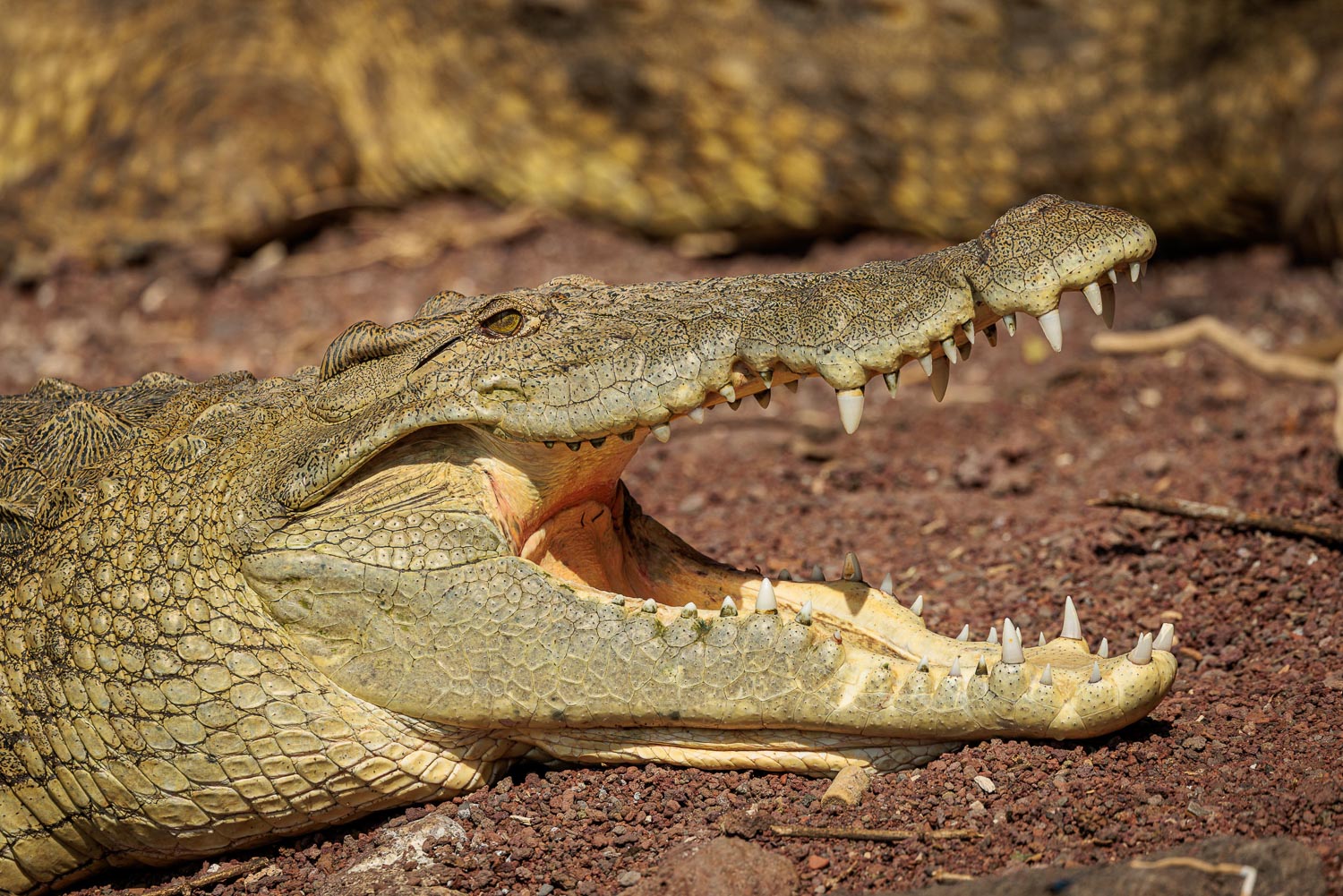
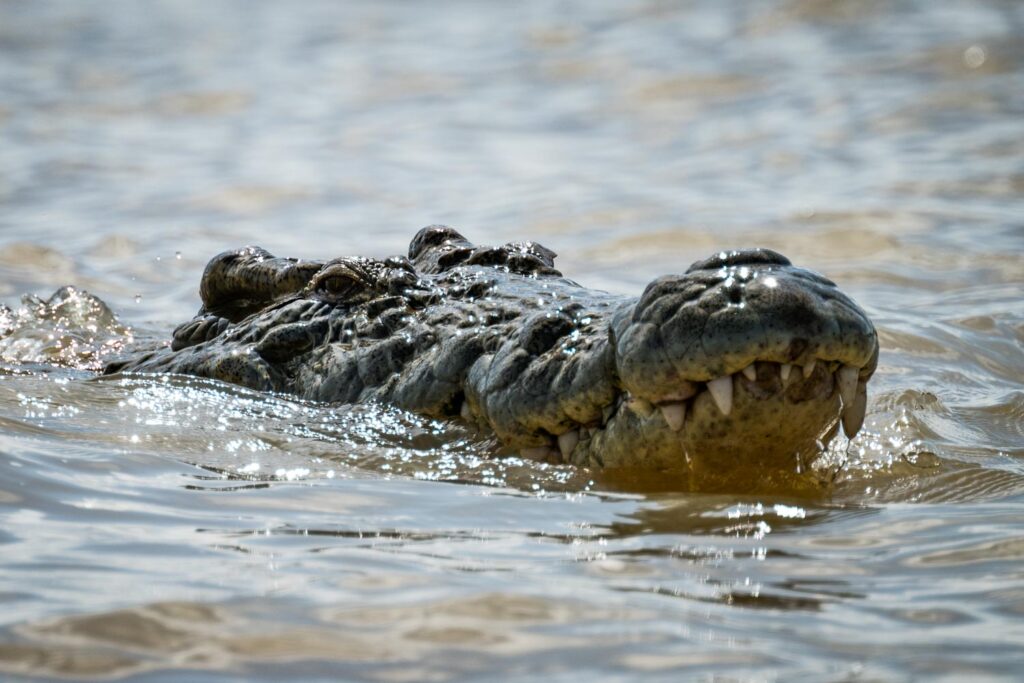
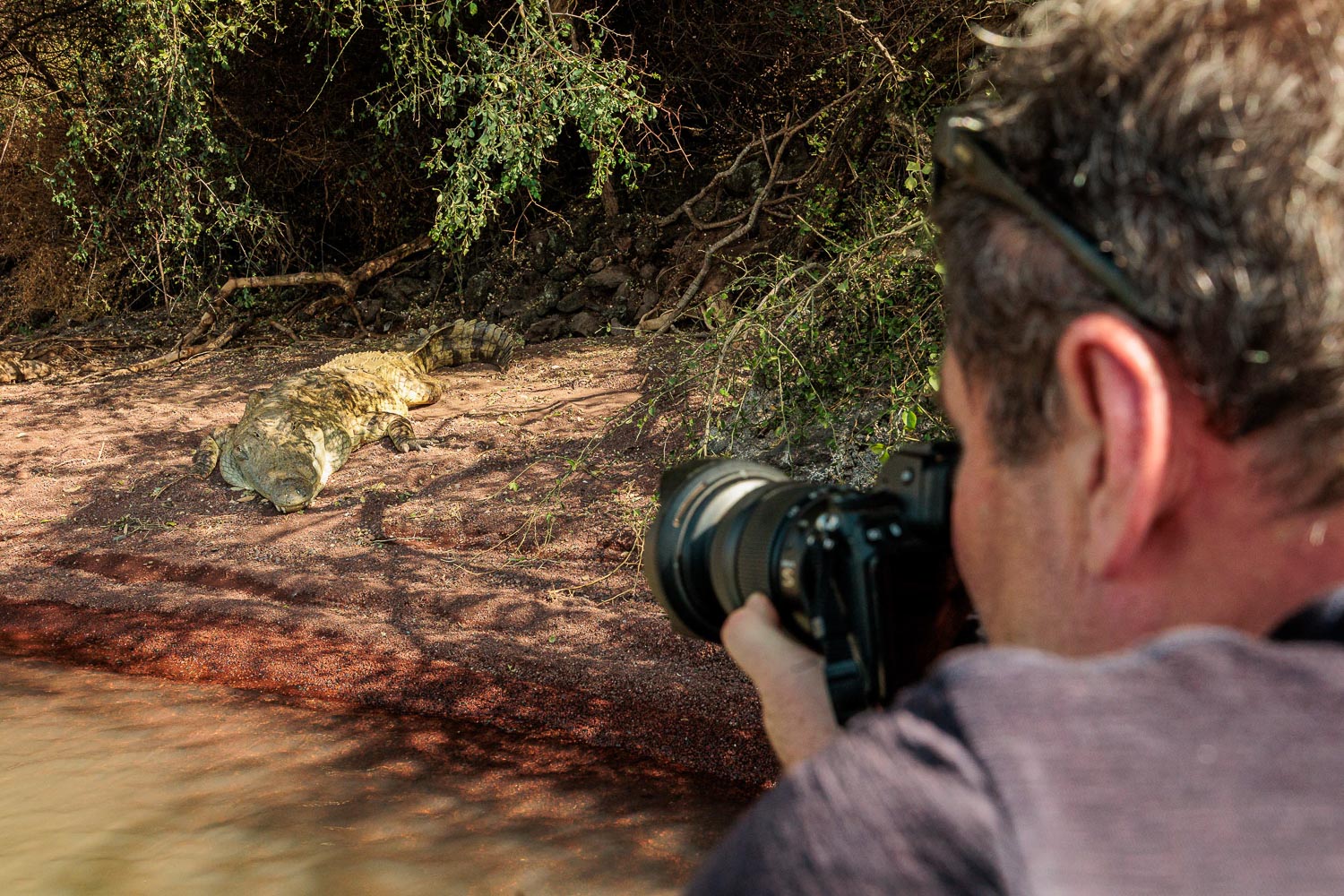
As we approach Ganjulle Island, its silhouette like a giant turtle, a massive crocodile surfaces in front of our boat. We leap up – half thrilled, half terrified. Frits and Ruben scramble left with their cameras. I instinctively lunge right, trying to counterbalance the boat to prevent us from tipping into the water. We’re less than a metre away when the croc dives straight beneath the boat. I look up and only then I notice two more giants sunbathing on the shore nearby. We watch, mesmerized by these colossal, prehistoric-looking creatures, their armoured scales and enormous teeth protruding over their jaws.

Also known as Chamo’s ‘Crocodile Market’, along these shores, crocodiles are everywhere—some small, others monstrous. Occasionally, one glides silently into the water. ‘What do they eat?’ I ask, keeping my eye on the one closest to our boat. ‘Mostly fish,’ Tome says. ‘But also, zebras that come to drink.’ He pauses. ‘And every year, six to eight fishermen disappear here…’ Further ahead, we see a few potential victims, local fishermen balancing on flimsy, makeshift rafts, barely skimming the water’s surface.

I stare into the murky water. ‘As long as the motor’s running, you can put your hand in,’ Tome says. ‘But if it’s off – never. You’d lose your hand. Maybe more.’

‘As long as the motor’s running, you can put your hand in. But if it’s off – never. You’d lose your hand. Maybe more’

A Night Among Predators

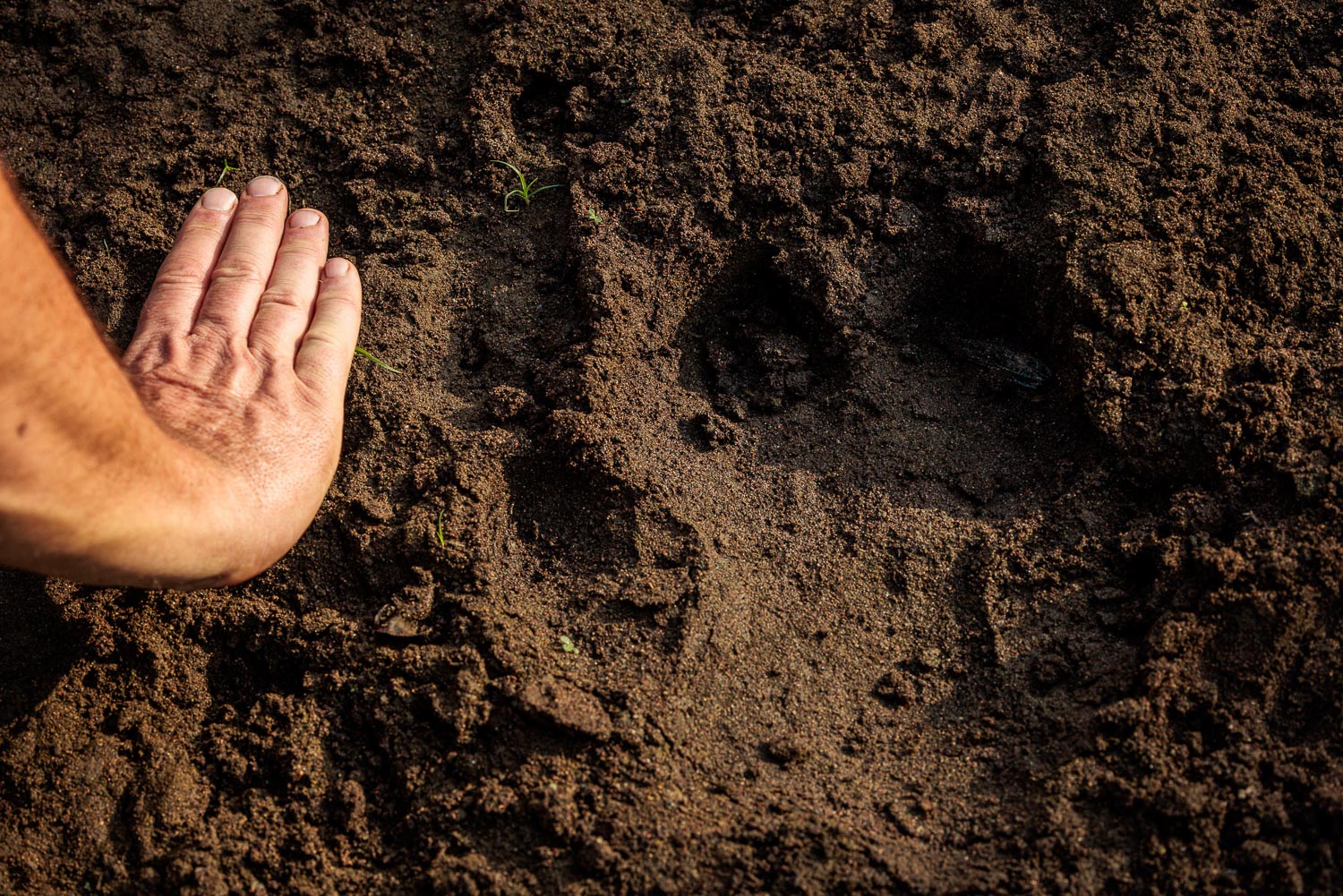
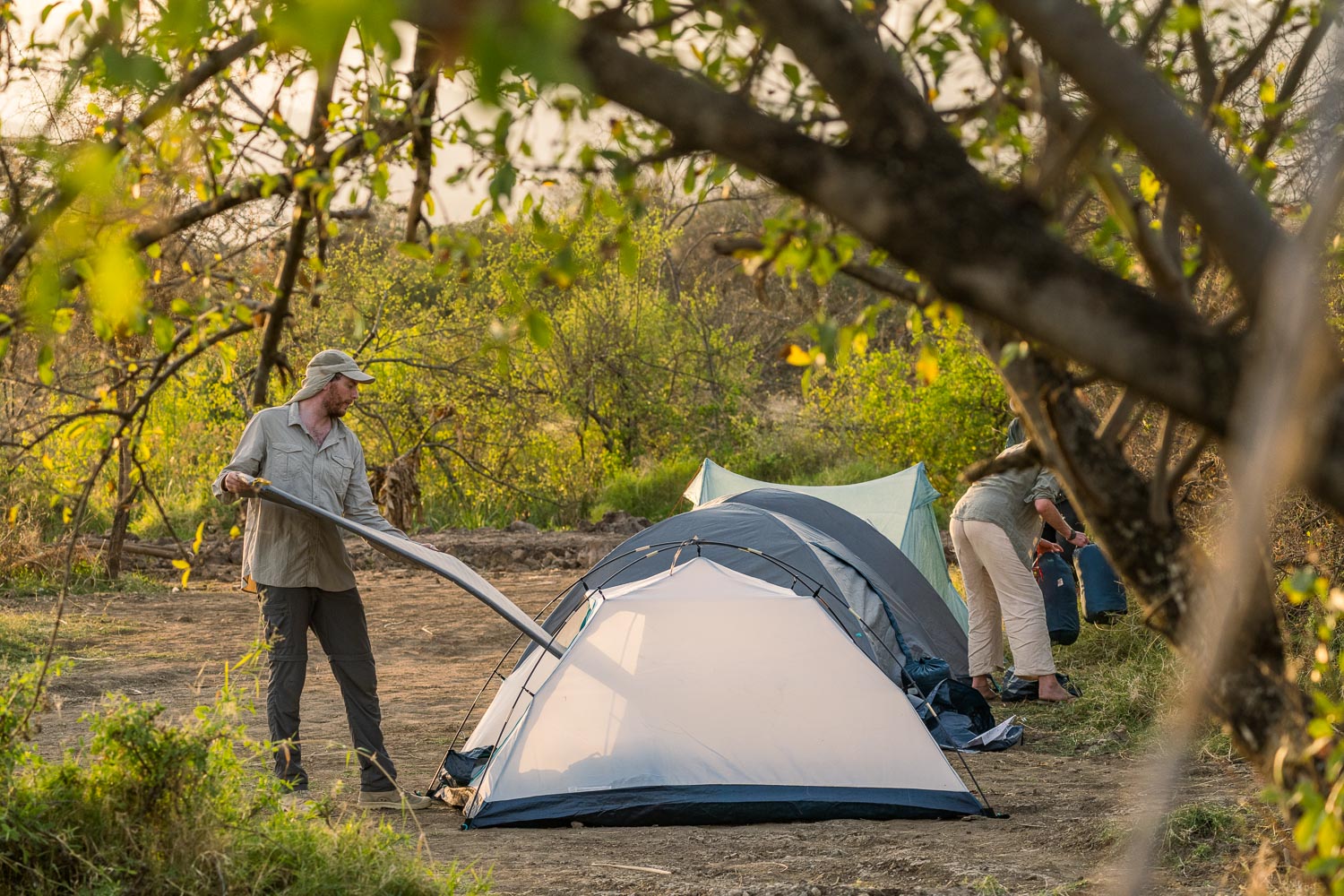
Back at camp, another enormous croc lounges near the jetty. We pitch tents at Asnake’s suggestion—near bushes and a sandy path. The terrain is scattered with hippo footprints – we may have stolen their favourite spot for the night.

I wipe off the sweat on my neck – and a dozen of ants. My tent’s up. Dusty and drenched, I sit to watch the sunset as Asnake builds a fire, which, along with his firearm, is meant to keep dangerous animals at bay. Tome cooks a simple dinner over a gas flame – spaghetti with tomatoes, onions, garlic. It smells heavenly.

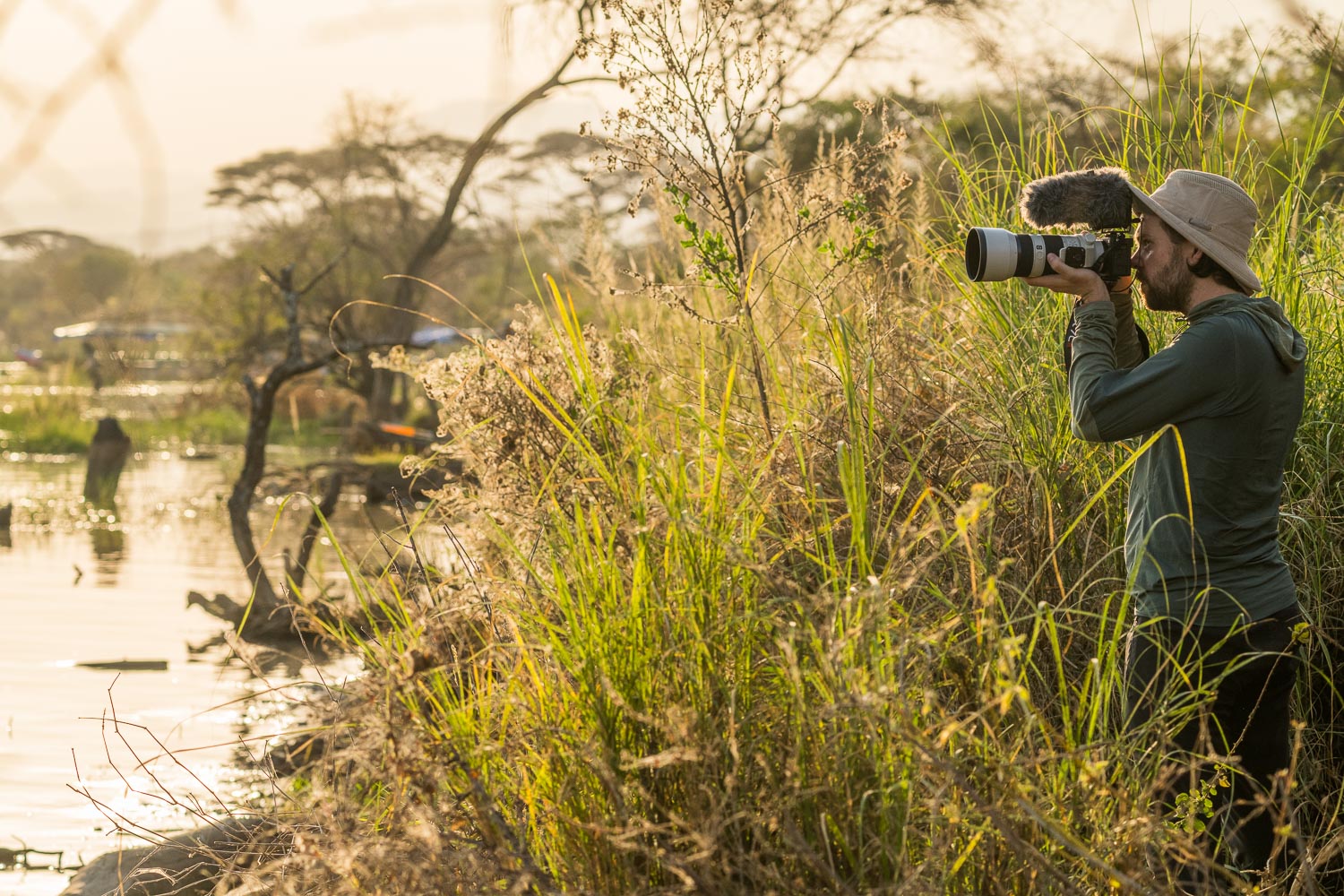
The sun dips below the horizon, and across the water, baboons appear. A marabou stork soars overhead. The soundtrack of Lake Chamo plays on—chattering birds, chirping crickets, and the occasional mysterious splash in the water. The moon, a delicate crescent, hangs like a faint smile in the deepening blue sky. Above it, Saturn, Venus, and Uranus twinkle. The night fills with stars. Somewhere in the darkness, a deep growl rumbles. ‘A hippo,’ Asnake murmurs. ‘But don’t worry, they only come out at night.’

20250201-_DSC4964
Bushwhacking Our Way to Forty Springs

At 5:30 AM, my alarm sounds. On the horizon, the first streaks of pink and purple announce the rising sun. One by one, we all scramble out of our tents unscathed. It seems I was the only one who slept well; the others kept awake by the sounds of hungry predators. ‘Did you hear the hyena?’ Asnake asks. ‘It came to check things out – right next to Frits’ tent. A hippo scared it off.’

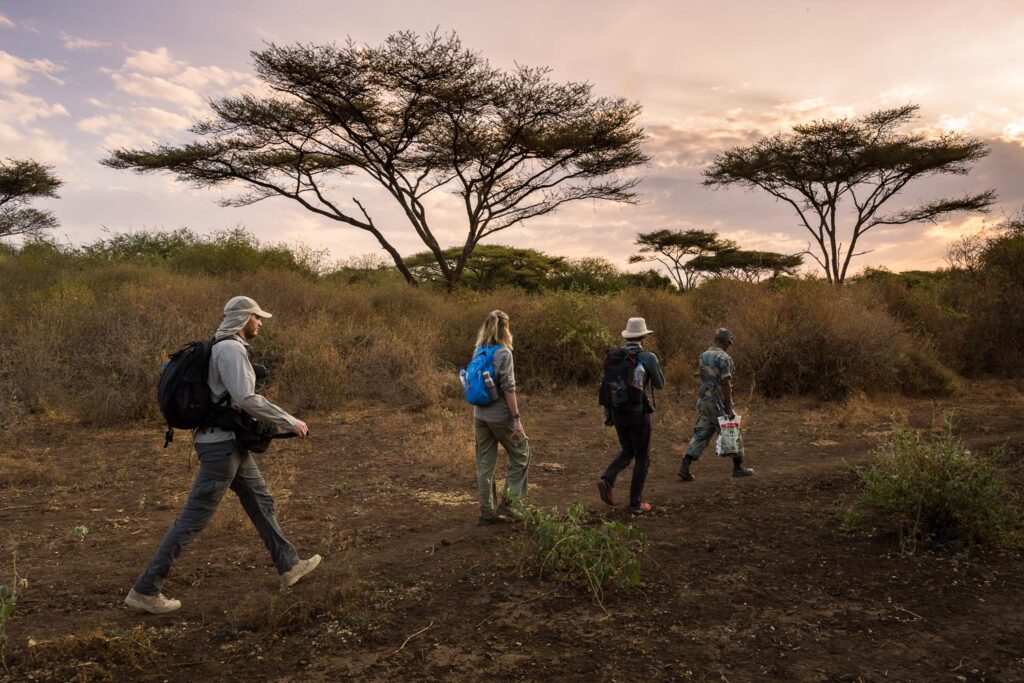
Breakfast is fruit and leftover bread. Seeing our disappointed, caffeine-hungry faces, Tome apologises for the lack of coffee—apparently, we drank the entire supply last night. We get over the disappointment quickly. After all, this is the kind of experience that scores zero stars for comfort but tops the charts for adventure. We fill our water bottles, pack up, and hop into the minibus. Minutes later, we’re at the trailhead.

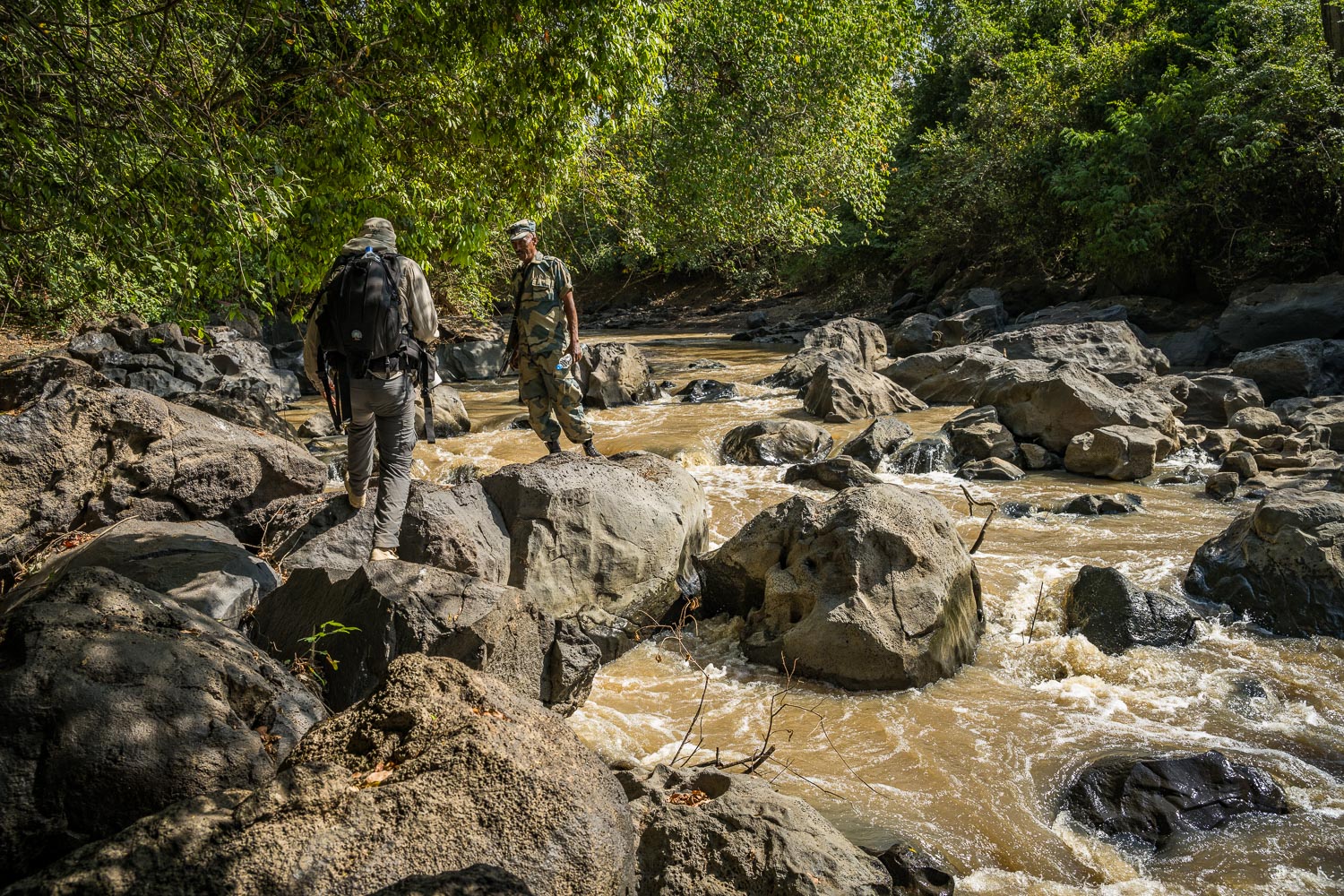
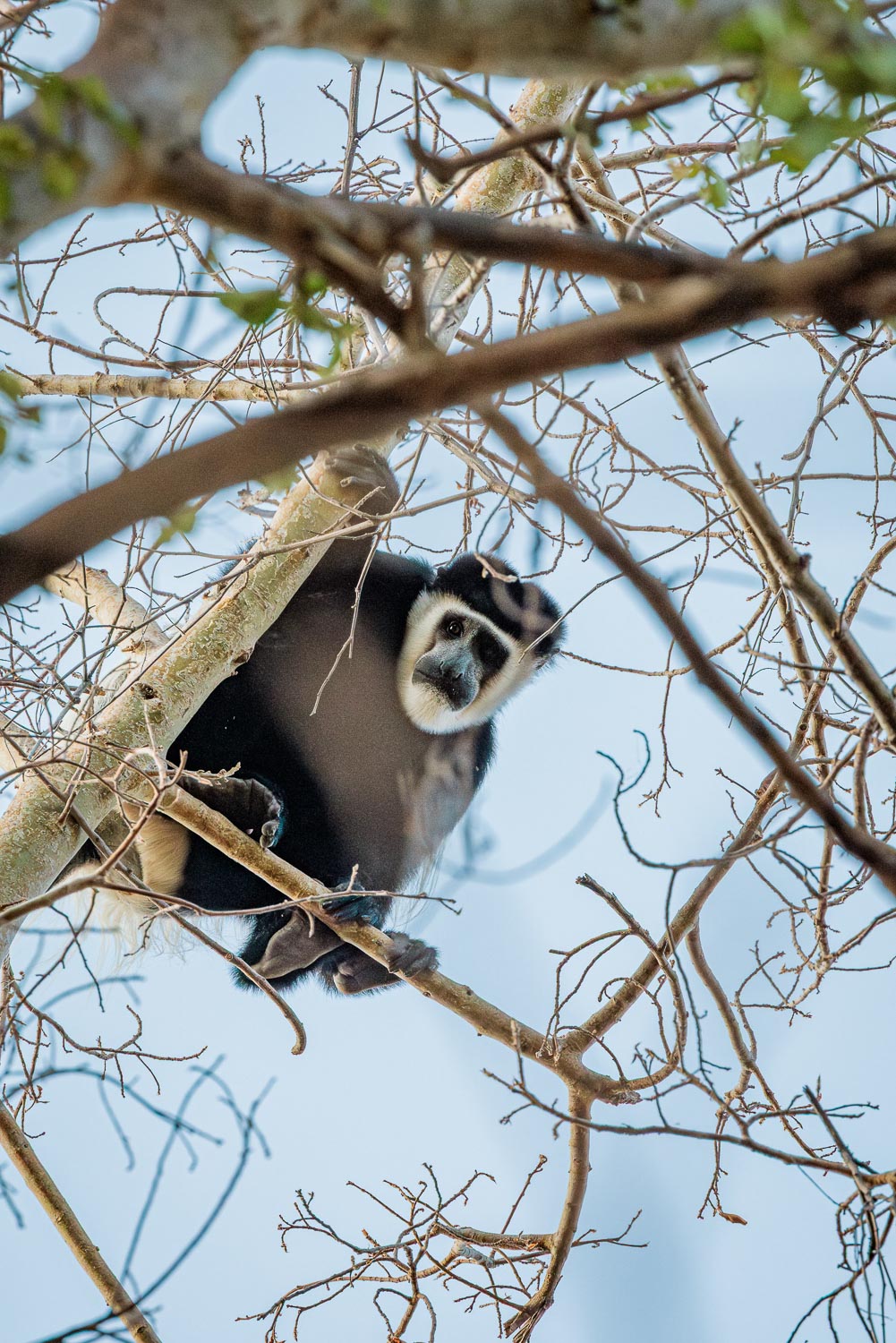
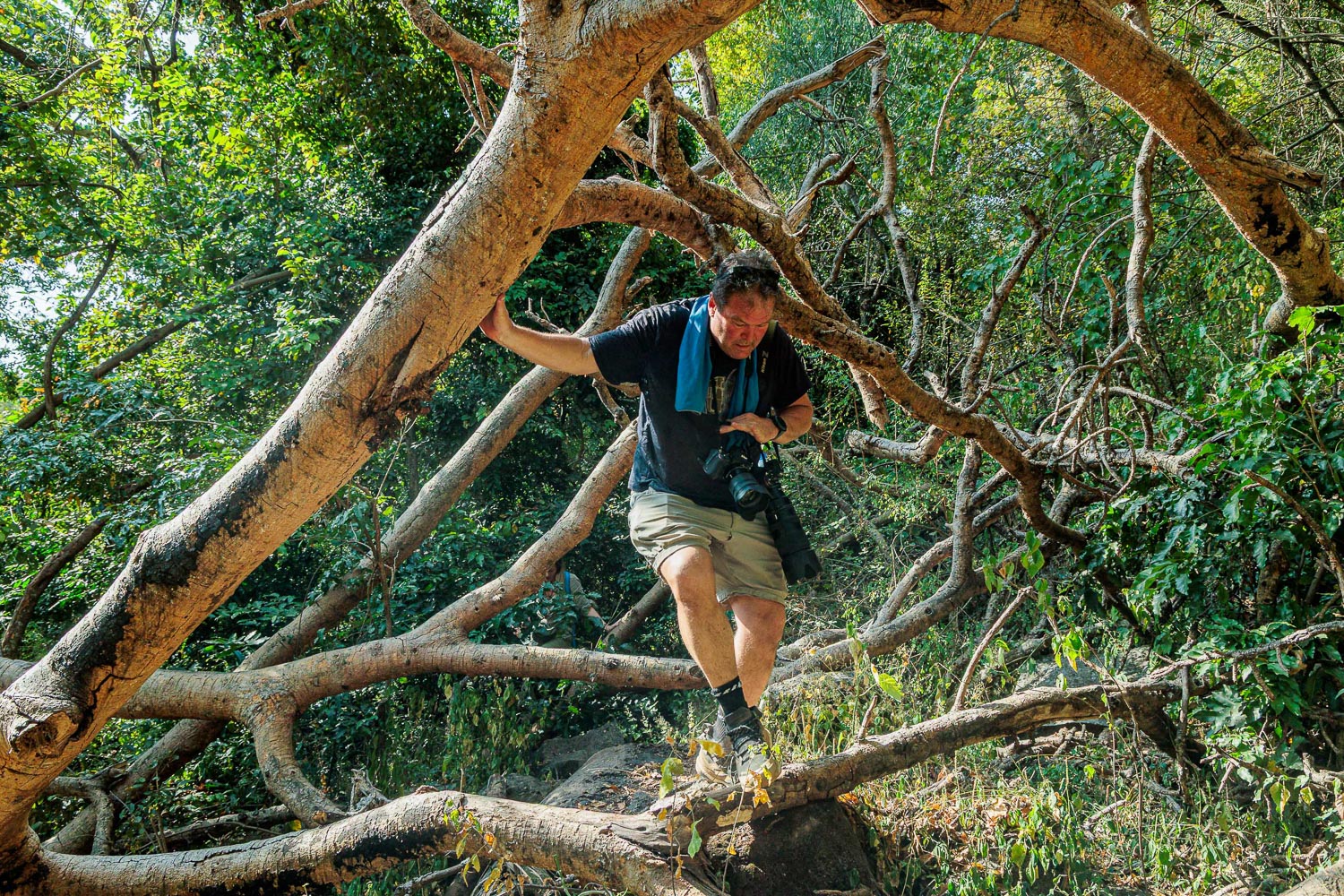
We follow Asnake through scrubland and narrow paths, then across open spaces surrounded by trees teeming with birds, baboons, and green monkeys. We trudge through mud, leap over streams, and climb over fallen trees. Along the way, we see countless hippo footprints and riverbanks that have collapsed under their immense weight.

‘Did you hear the hyena? It came to check things out – right next to Frits’ tent. A hippo scared it off’

About two hours in, we stumble on an illegal charcoal site. Trees have been felled and buried under soil to burn slowly into carbon-rich fuel. ‘This tells you a lot about the poverty here,’ Asnake says grimly. He picks up the abandoned tools and reports the site to park authorities.

We move on, following the widening river. The trail thickens with thorn bushes, forcing us to scramble over rocks and push through dense vegetation. We rest on riverside rocks for a simple lunch, soaking in the wild beauty.

Eventually, the landscape opens and the trail widens. Monkeys swing through trees overhead. A kingfisher darts by in a flash of blue and green. Cheers echo in the distance—we’ve reached Forty Springs, the namesake of Arba Minch.

We collapse onto the grass, sweaty, scratched, and saturated in adventure. Local boys launch themselves into the water with Olympic-level enthusiasm while we sit in dazed silence.‘ Asnake,’ I say, ‘we survived crocodiles, hippos, a curious hyena, and a night of questionable sleep.’ He nods. ‘We even survived waking up ánd finishing this pretty challenging hike without coffee.’ He nods again, this time with more sympathy. I stretch, groaning. ‘Which means it's finally time to fix that last problem.’

Asnake grins. ‘Let’s go. I think you’ve deserved it.’

Say Yes to Adventure (World Nomads Has Your Back)

Adventure is unpredictable. And that’s the whole point. However, when things go wrong (lost bags, sprained ankles, missed flights), having a backup plan is helpful. World Nomads was created by travellers, for travellers, covering 150+ adventure activities you love most. Simple, flexible, and ready when you need it. Pack freedom. Pack World Nomads.

Keep the Stories Flowing

Love what we do? Help us keep sharing the world’s most inspiring travel stories. At WideOyster, we believe in adventure, authentic storytelling, and capturing the world – raw, real, and breathtaking.

We travel far and wide to bring you stunning photography, in-depth travel journalism, and immersive stories that inspire and inform. But this doesn’t come free. It takes time, passion, and resources to keep WideOyster running without paywalls or clickbait – just pure, high-quality travel content.

If you love what we do, please consider supporting us with a one-time contribution.
Click below to support us and be part of the adventure.

ABOUT THE AUTHOR

With over 25 years of experience in media (tv, online, print), communication, and (travel) journalism, Barbera Bosma joined the WideOyster collective as Executive Editor-In-Chief in October 2024. She’s committed to and passionate about showing the beauty and variety of the world and its creatures through storytelling. 'For adrenaline-filles, out-of-your-comfort-zone adventure travel I love mountainous Latin-American destinations, Chile, Peru, Ecuador. But central and south Africa (Ethiopia, Bots...

ABOUT THE PHOTOGRAPHER

Ruben Drenth is a photographer known for his striking visual storytelling and unique perspectives, specialising in travel, outdoor and leisure. Ruben’s work has been published in WideOyster, National Geographic Traveler, Op Pad and Volkskrant Magazine, among others. Ruben’s favourite type of trip? ‘The ones where you tell yourself ‘why?!’ at least a dozen times (per day). Because when cycling and camping in a tent for two weeks during rain, sub-zero temperatures, and merciless headwinds, it make...

The Spirit of Dorze

From Ancient Crafts to Cascading Waterfalls

Omo Valley Tribes, Ethiopia

A Journey into The Cradle of Humanity

Southern Ethiopia’s Gamo Highlands

Village Life, Wild Camping and Hidden Waterfalls

Eco Escape in Arba Minch

How one man’s dream built the South’s first eco campsite

Flavours of Ethiopia

Taste the Land of Origins

Secrets of Silk

Inside Ethiopia's Leading Silk Farm

Just like every trip needs snacks, our website needs cookies to function. Accept our cookies and let the adventure begin! Read our Privacy Policy.