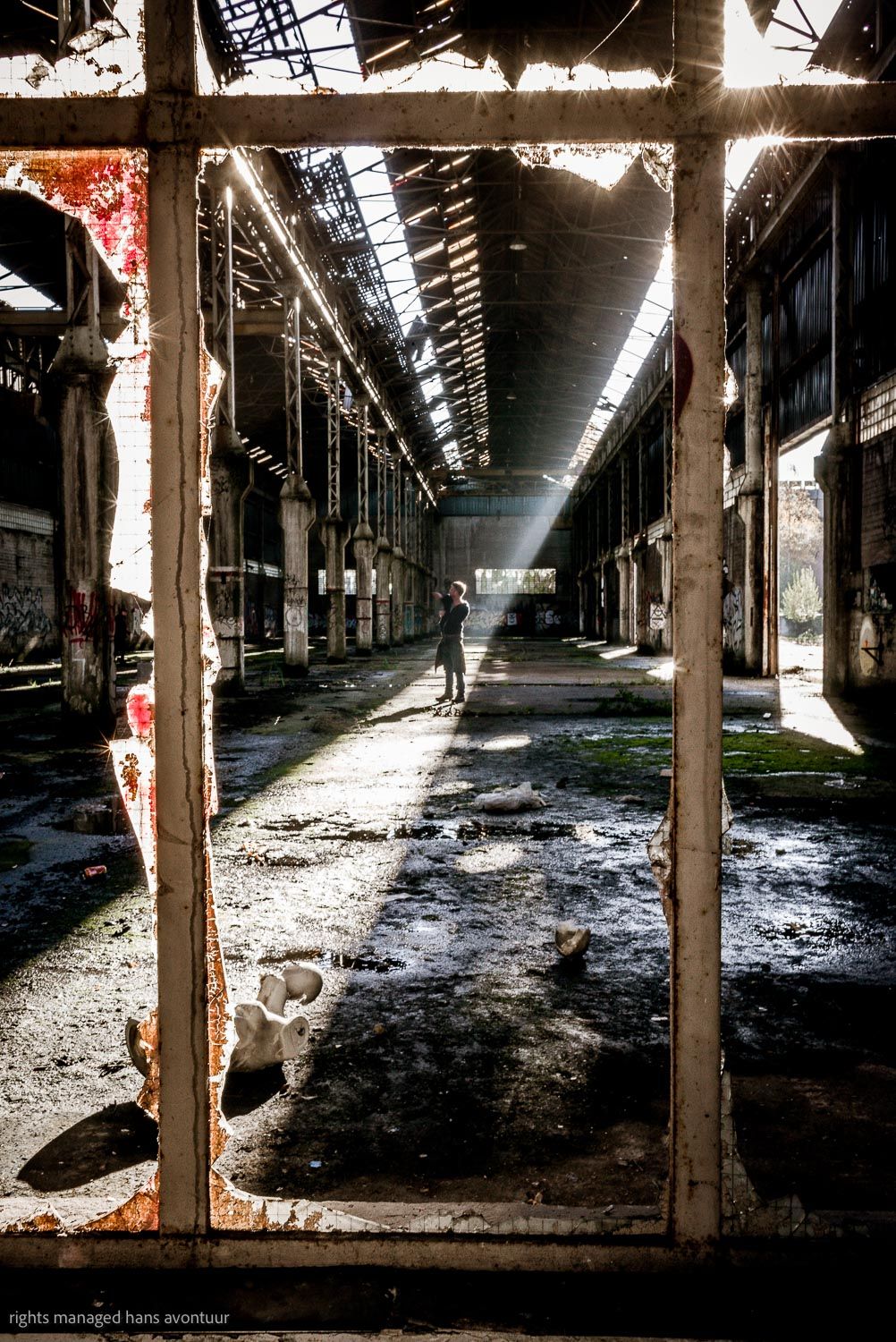
Beautiful? You be the judge. It's certainly the uncensored reality of Charleroi. Raw, honest, real. I cycle past the empty carcasses of blast furnaces and factories. The wind whistles right through them. The walls, beams, and pipes groan. For a long time, they were ashamed of the decay in the city. But that's changing.
During a previous visit to Charleroi, I spoke to several young people. Unlike the generations before them, they proudly proclaim that they are from Charleroi. In search of identity in an increasingly uniform world, T-shirts with inscriptions like 'Carolo bien élevé' and 'Sons of Barakis' are even popular. The latter refers to the term Baraki, once a slur for ill-mannered miners who lived in barracks.
The youth no longer run away from their city's painful history. In the 19th century, industry brought Charleroi glory and prosperity. And left the residents helpless when the good years were over. 'It's part of who we are,' several people told me. 'If you accept that, you can face the future with confidence. Don't complain, but roll up your sleeves. Just like our ancestors.'
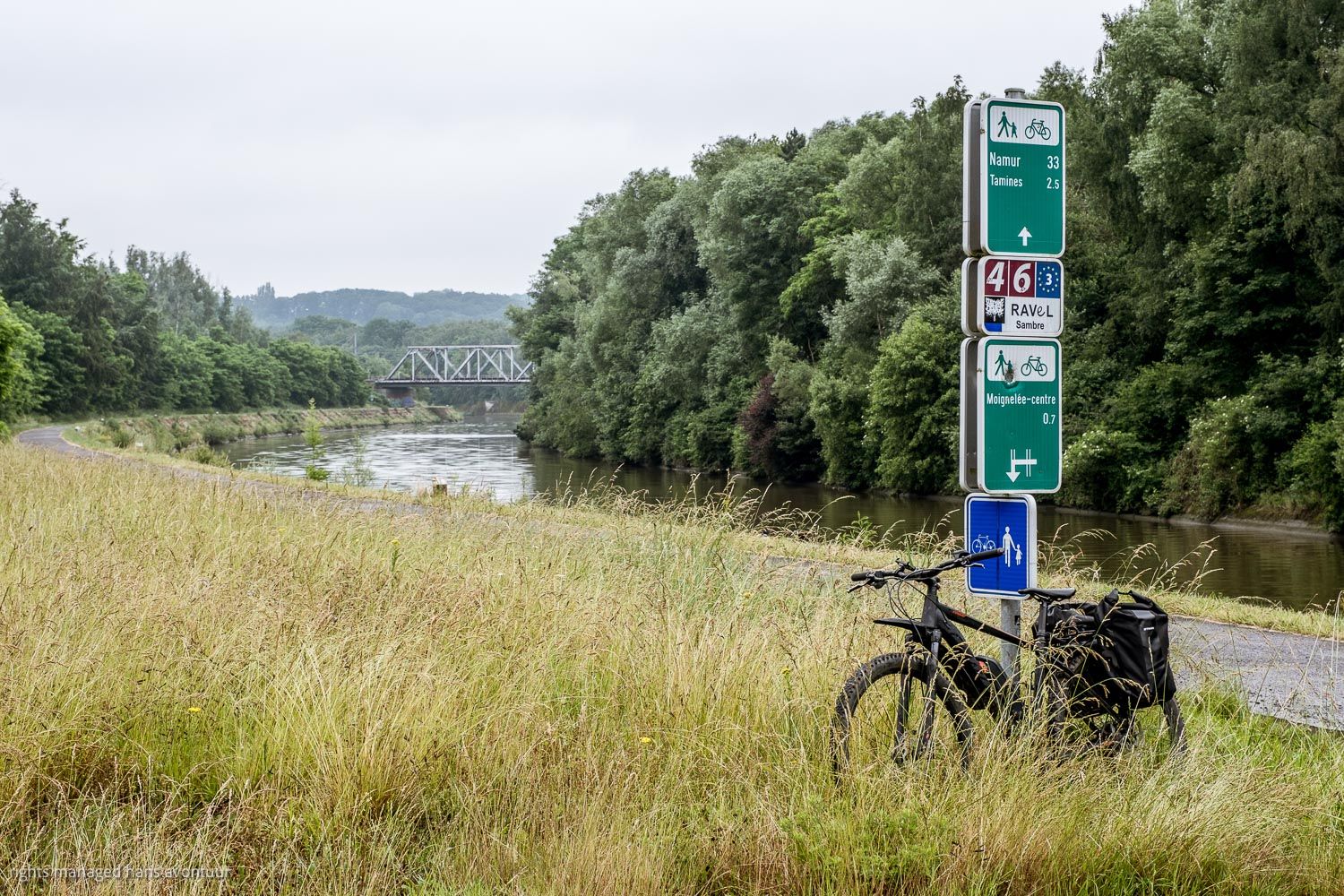
I cycle out of the city along a path by the Sambre. Past overgrown train tracks, rusty bridges, and factory buildings in a state of decay. I've screwed my phone into a holder on the bike. An app with a description of the UNESCO cycling route shows the way. Handy. The wind through the valley is right in my face. Time to pedal hard.
I search for and find a pace I can maintain for a long time. My exploration of Charleroi has added some kilometers to the 63 that were on the original schedule for today. The luggage is in the panniers. Nothing too much, nothing too little. That's what makes bikepacking so enjoyable. A feeling of ultimate freedom.
The village of Tamines comes at just the right time. I've seen enough industry, and according to the app, I'm now leaving the Sambre and the populated world behind. From now on, I'll be riding more and more through green areas. With the Ardennes around Durbuy as the goal. But that's for later. First, there's a steep climb uphill and the turn-off to the RAVel route, which follows a former railway line. Nice, because then the gradient is never more than a few percent. The locomotives of the past couldn't handle more than that.
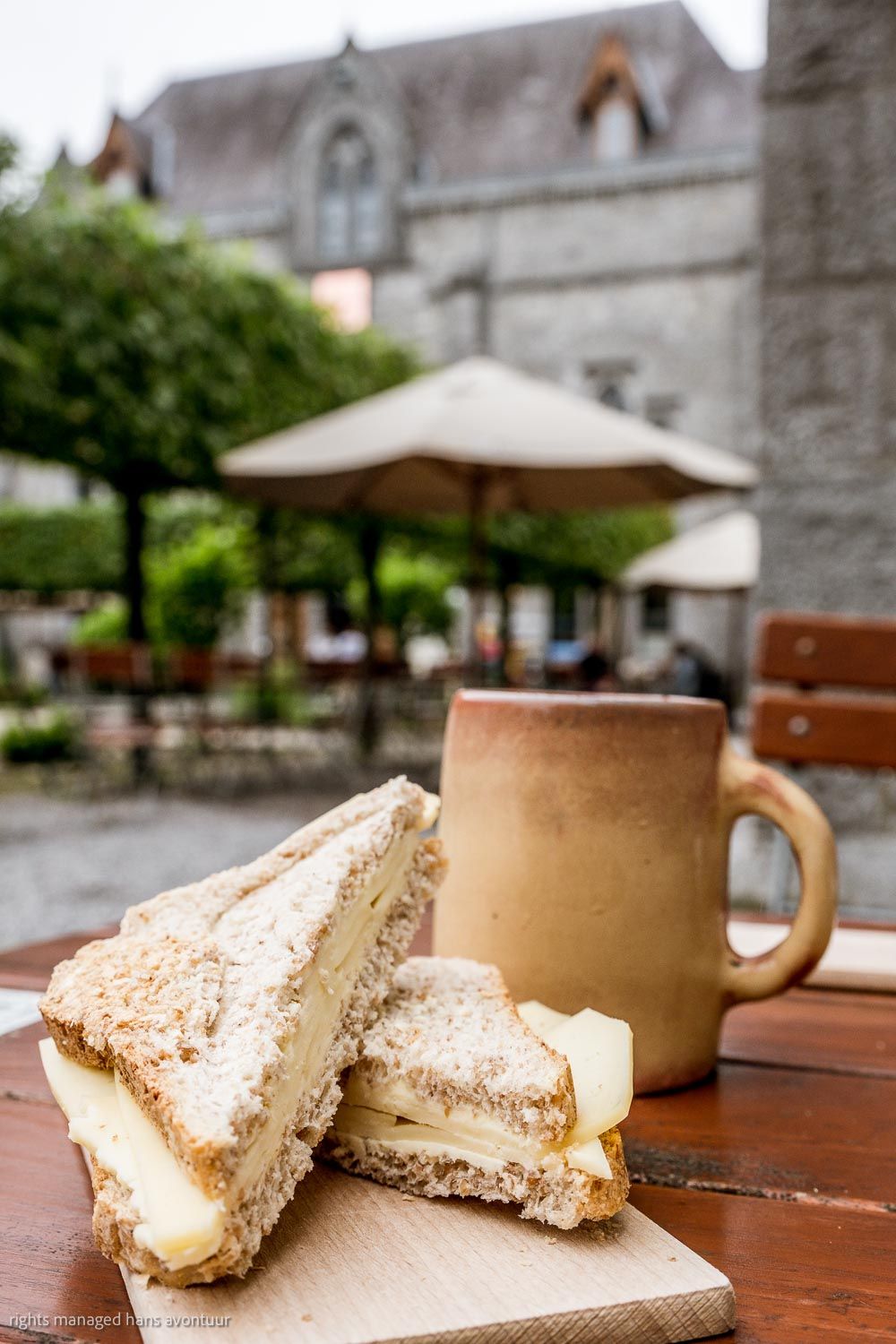
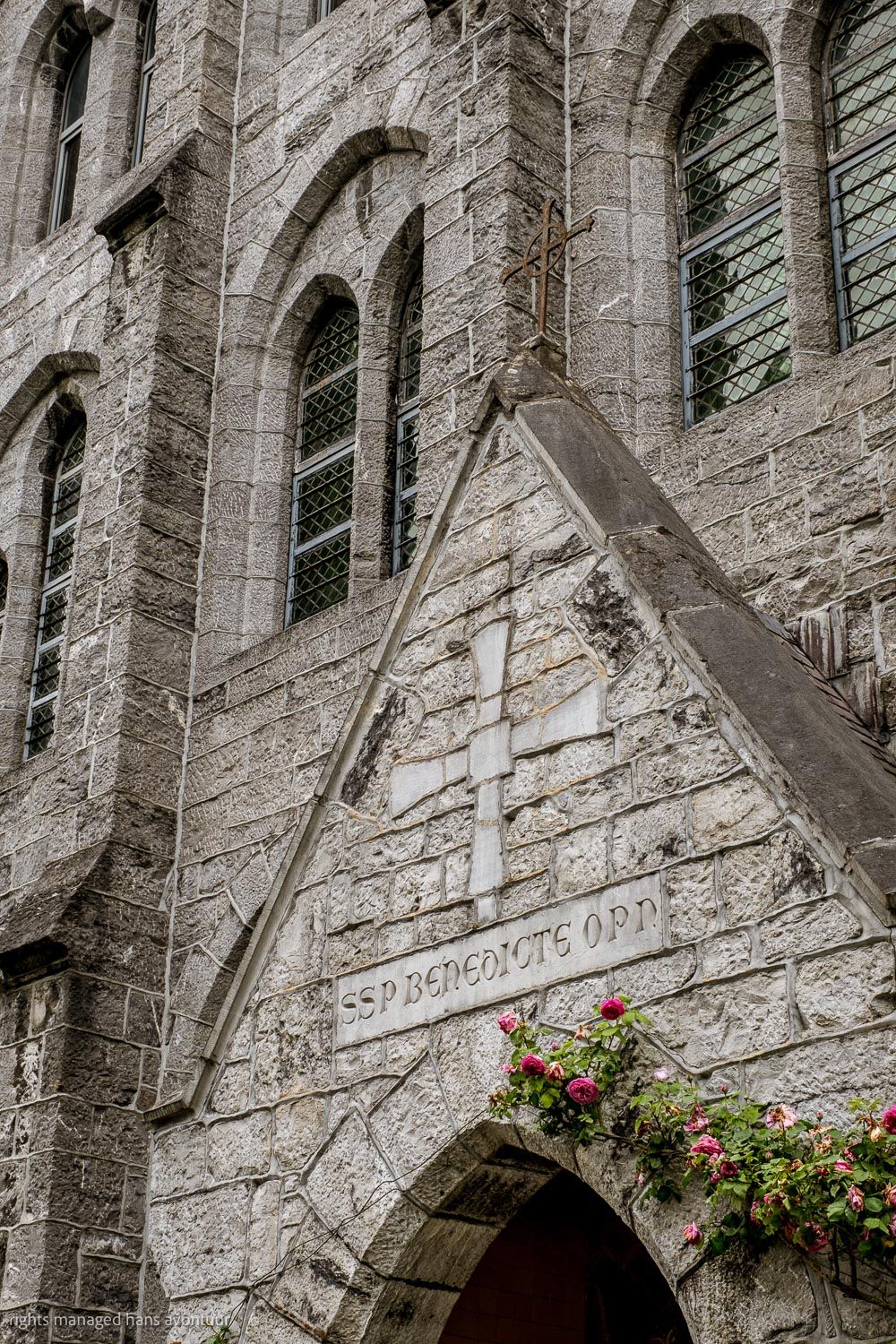
The Abbey of Maredsous tempts me to take a detour. It's the ideal lunch spot with beer, bread, and cheese from the abbey itself. Hearty fare for the necessary energy. Not an unnecessary luxury because the afternoon is challenging with the beautiful Molignée valley, the pretty village of Sosoye, and the long, long staircase to the citadel of Dinant. Unfortunately, the sun doesn't show itself, but even in the gray, the view is beautiful.
The endpoint is a few kilometers further down in the Lesse valley. A large glass of Leffe Blonde awaits on the covered terrace.
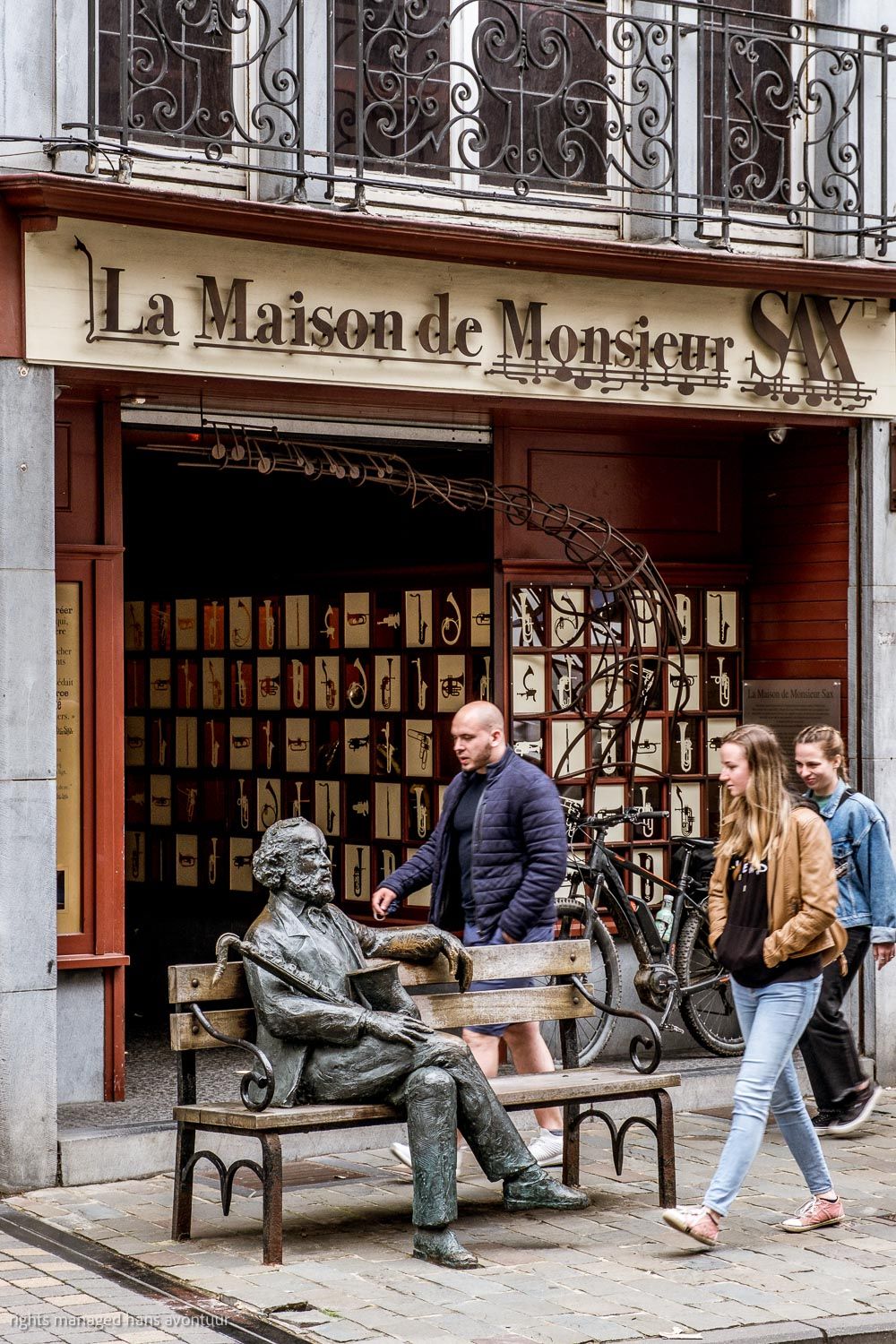
The morning gray creates an atmospheric mood at departure. I cycle quietly along the Lesse and the Meuse. It goes over paths, quays, and bridges. In Dinant, I stop briefly at the house of Adolphe Sax, inventor of the saxophone and the city's most famous son. In the small building, there's a small but beautiful exhibition about the exceptional life of the man and his invention.
At the Abbey of Leffe, I cycle away from the Meuse, into the Leffe valley. It's delightful there. The freshness of the fast-flowing water passes along the sometimes steep walls. Before the industrial revolution, there were watermills and marble sawmills that operated on water power. With the advent of steam engines, they all disappeared.
Floating through the Condroz, a region on the shoulders of the Ardennes. The route on the app leads me over deserted roads along fields full of potatoes, corn, grass, and wheat. This is the world of bare hands in the full ground. Not governed by tech giants and their algorithms, but by the elements. So authentic. You'd put the region on the World Heritage List for it.
The break on the square of Ciney comes at the right time. The capital of the Condroz once had a large prestigious station because the royal family came by train from Brussels to their hunting grounds in Ciergnon. It was the time when railways symbolized speed and progress.
I order a cup of coffee and let village life pass by.
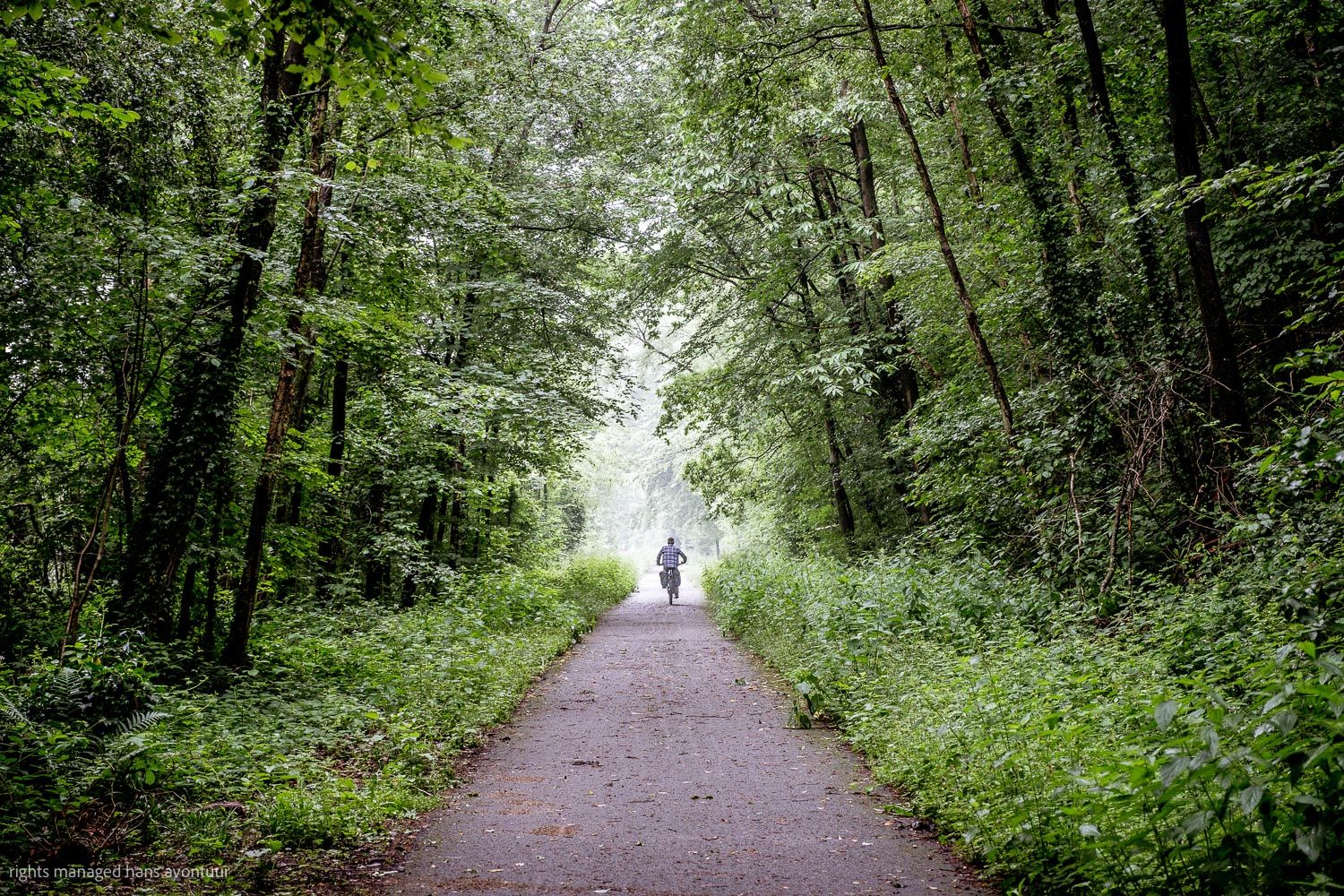
Out of the village, into nature. Over the former railway line number 126, that of the king and his hunting grounds. The train made the world much bigger and more exciting for people. Suddenly cities like Namur, Liège, and Luxembourg came within reach. And on weekends, you could take the train to unknown forests and lakes.
The arrival of this revolutionary transport at the time didn't come without discussion. Fierce debates were held in parliament: “The steam engines will sow death in our cities and their smoke will give our cattle eye diseases. Your machines will race through our quiet countryside at thirty per hour and crush everything in their path: men, women, children...”
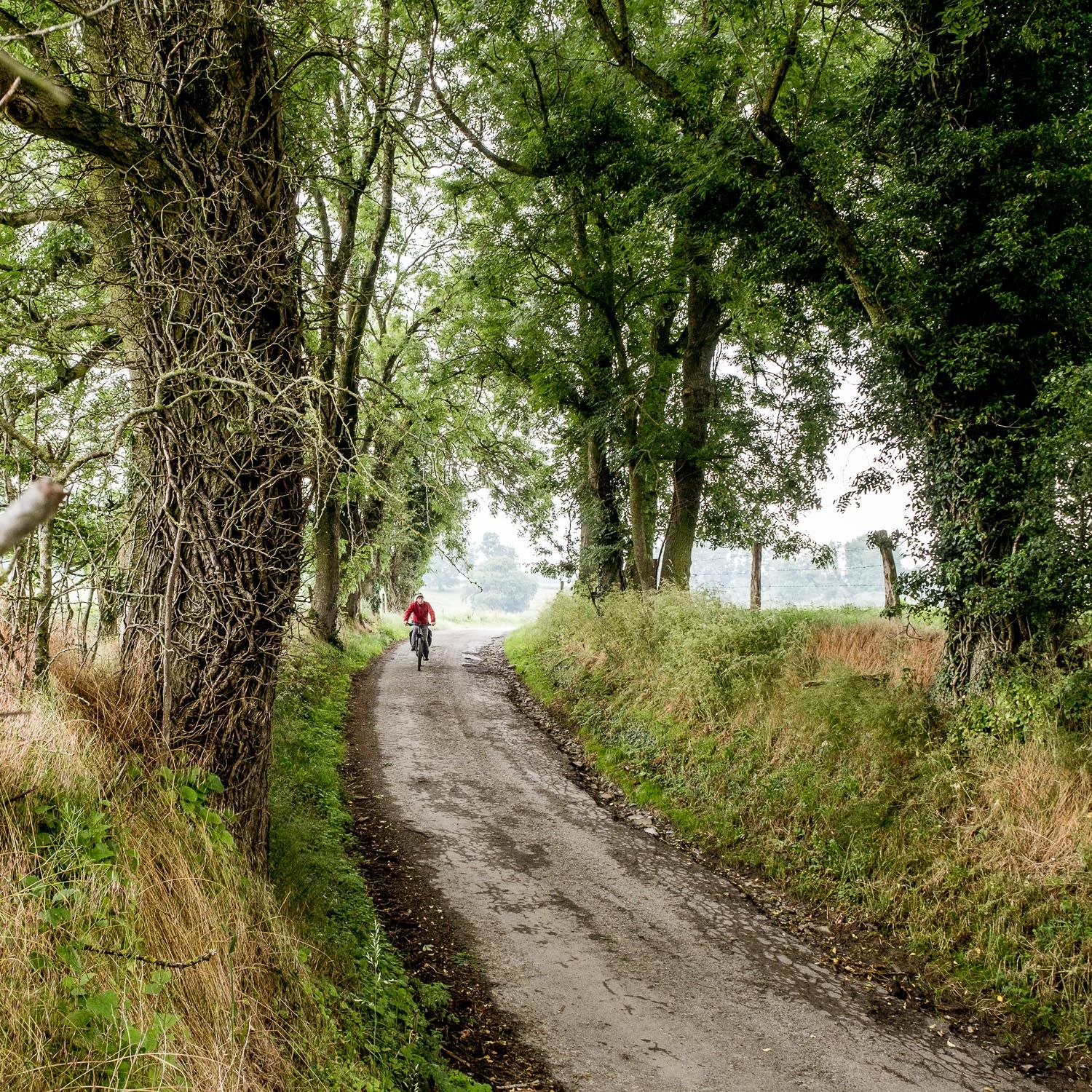
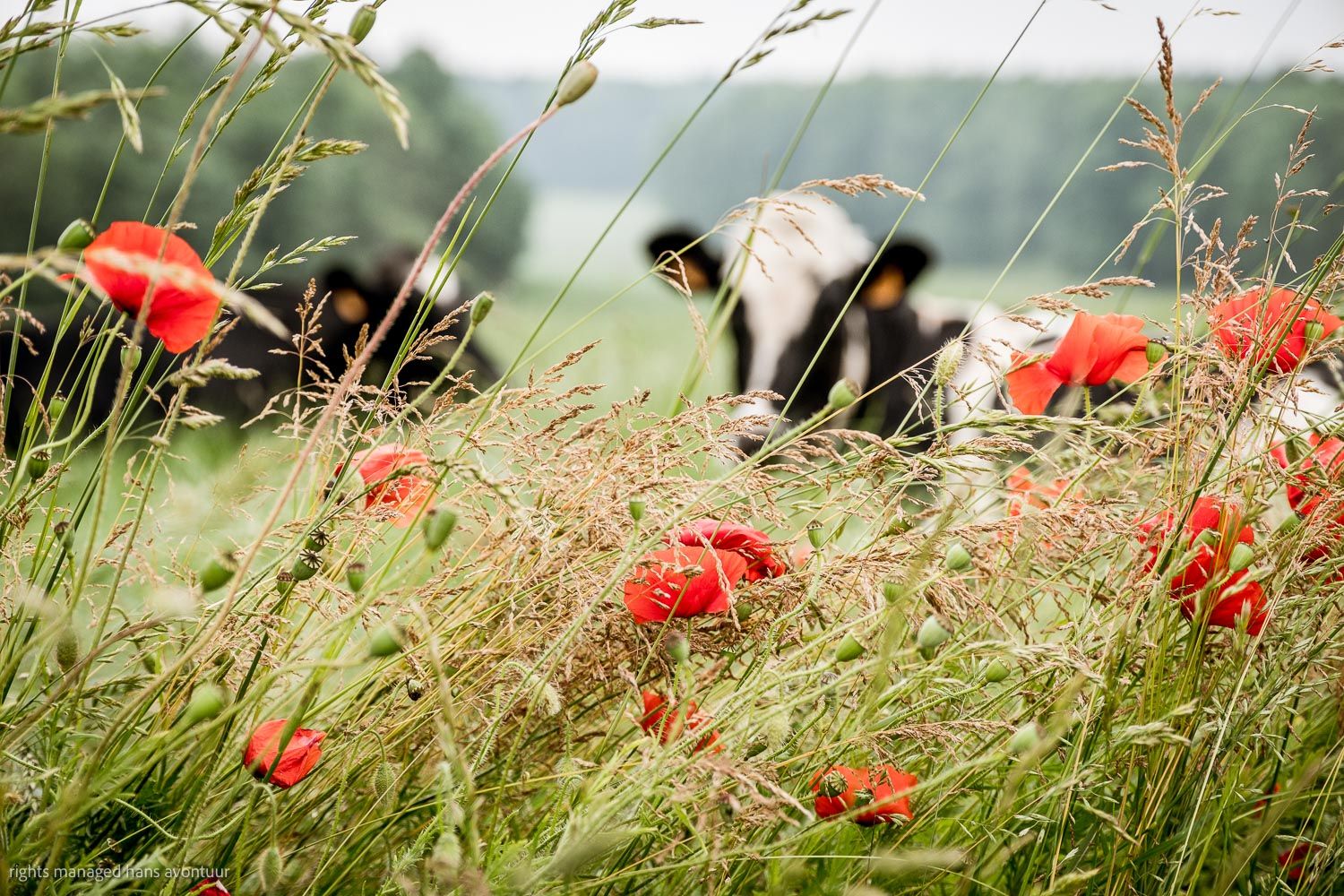
Fortunately, it didn't turn out that way. I continue my way through silent farmland and a tunnel of green trees. The verges are overgrown with flowers. Many poppies, cornflowers, and wild daisies. I imagine how fantastically colorful it will be here in autumn. As I try to keep up the pace, a cow watches me. Rabbits spring from the grass, running dozens of meters ahead of me on the right.
The former railway line never goes steeply up or down. Yet the gradient makes itself felt. As long as it's flat, I sometimes pedal at thirty kilometers per hour, but when it goes up two or three percent, my speed is halved. When I finally leave the L126 and ride into the hills, the real Ardennes loom before me. The peaks become higher, the valleys deeper, the climbing harder.
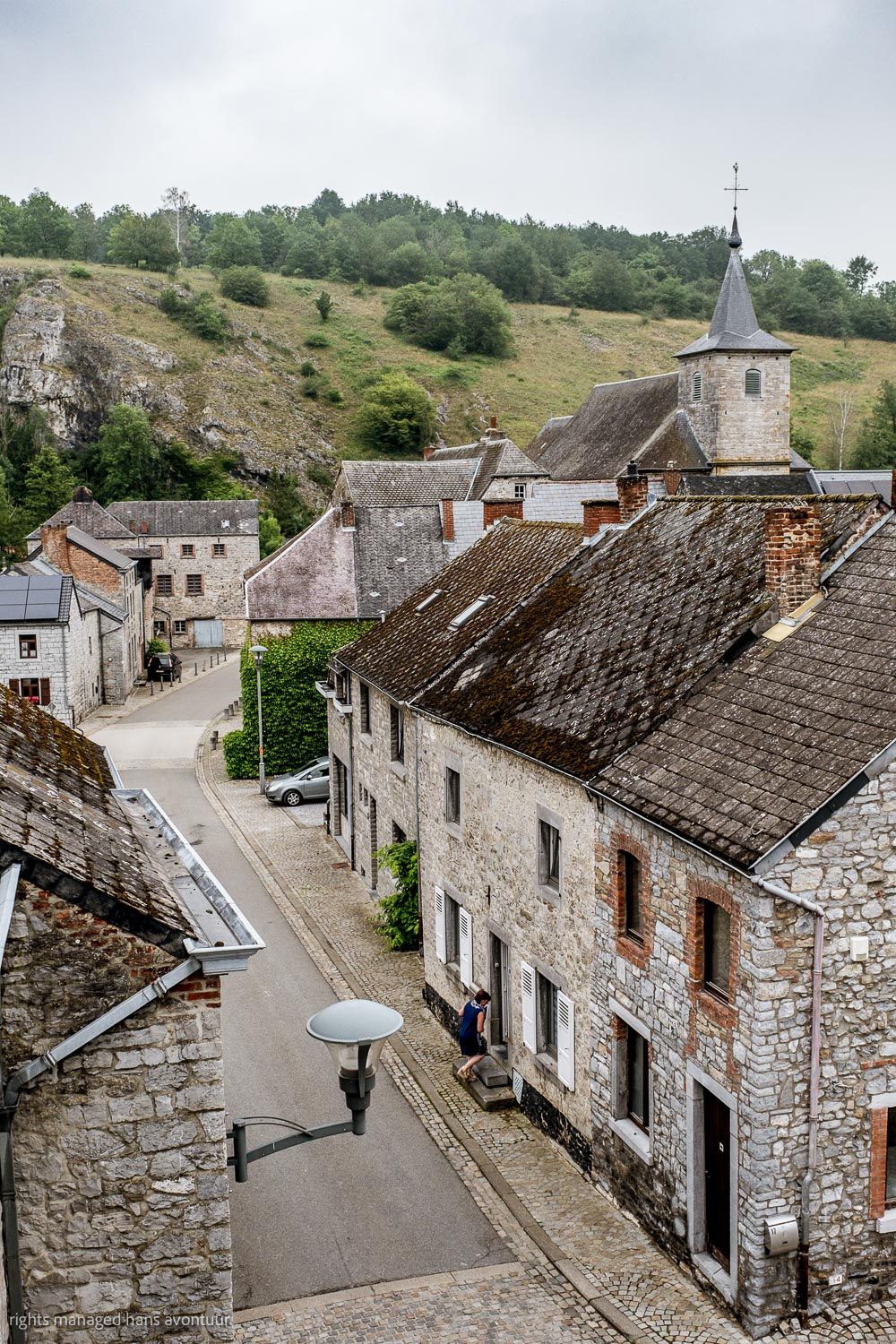
Down to Chardeneux, one of the most beautiful villages in Wallonia. The houses and farms are monuments of simplicity. I descend, touch the bottom of the valley, and climb up on the other side. Once at the top, I have a view of the Ardennes massif. The slopes lie in battle formation behind each other. I follow a gravel road over the ridge with views all around.
Further on awaits the descent to my endpoint Durbuy, which lies in the UNESCO Global Geopark Famenne-Ardenne, mainly known for its numerous caves.
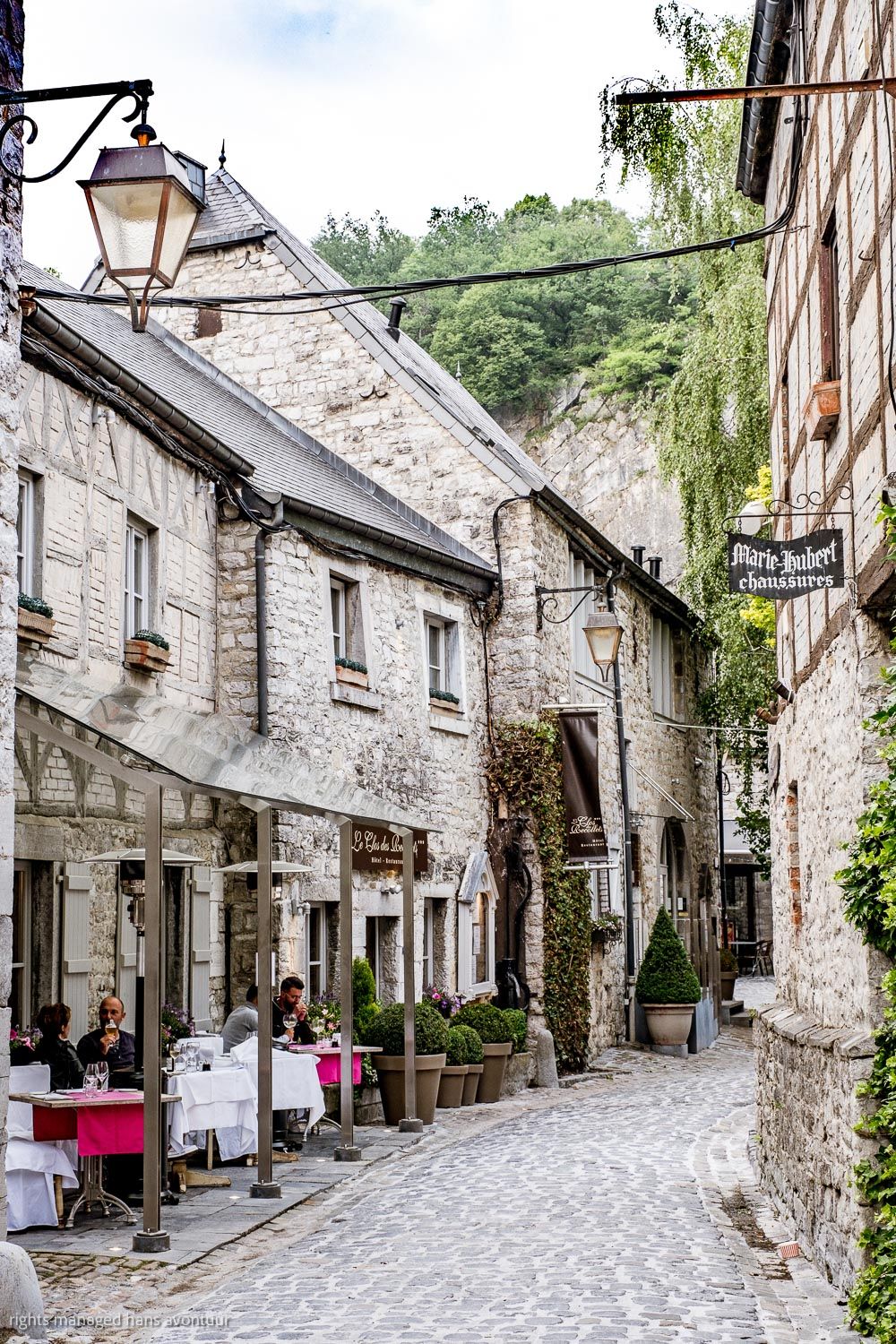
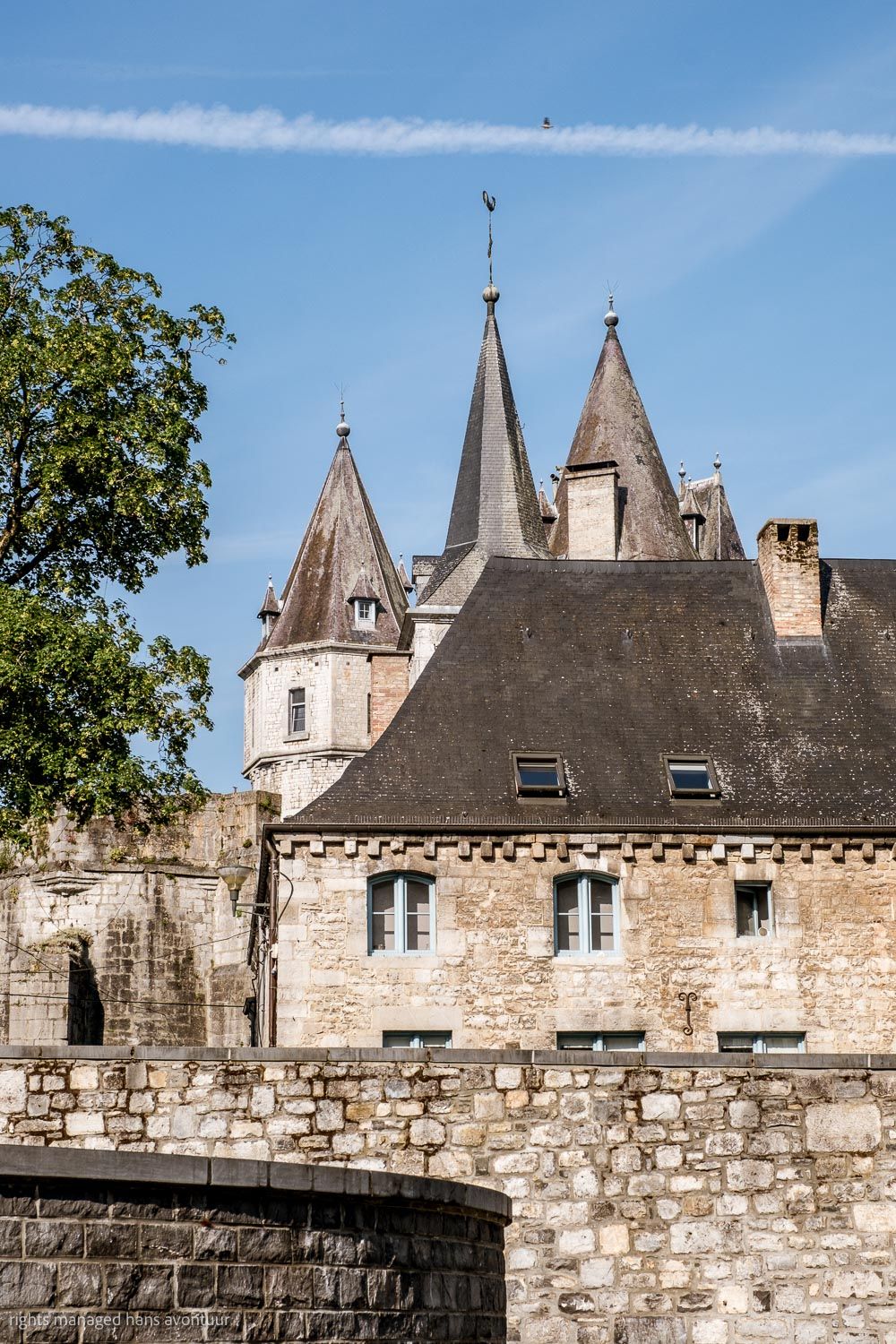
With my fingers on the brakes, I plunge into the depths. Durbuy is now rapidly approaching. Over the bridge, into the village, which welcomes me with open arms. It's beautiful. The castle, the church, the narrow streets, the natural stone houses, the paths along the Ourthe. The contrast with the starting point Charleroi could hardly be greater. Everything here is beautiful, sweet, and cute.
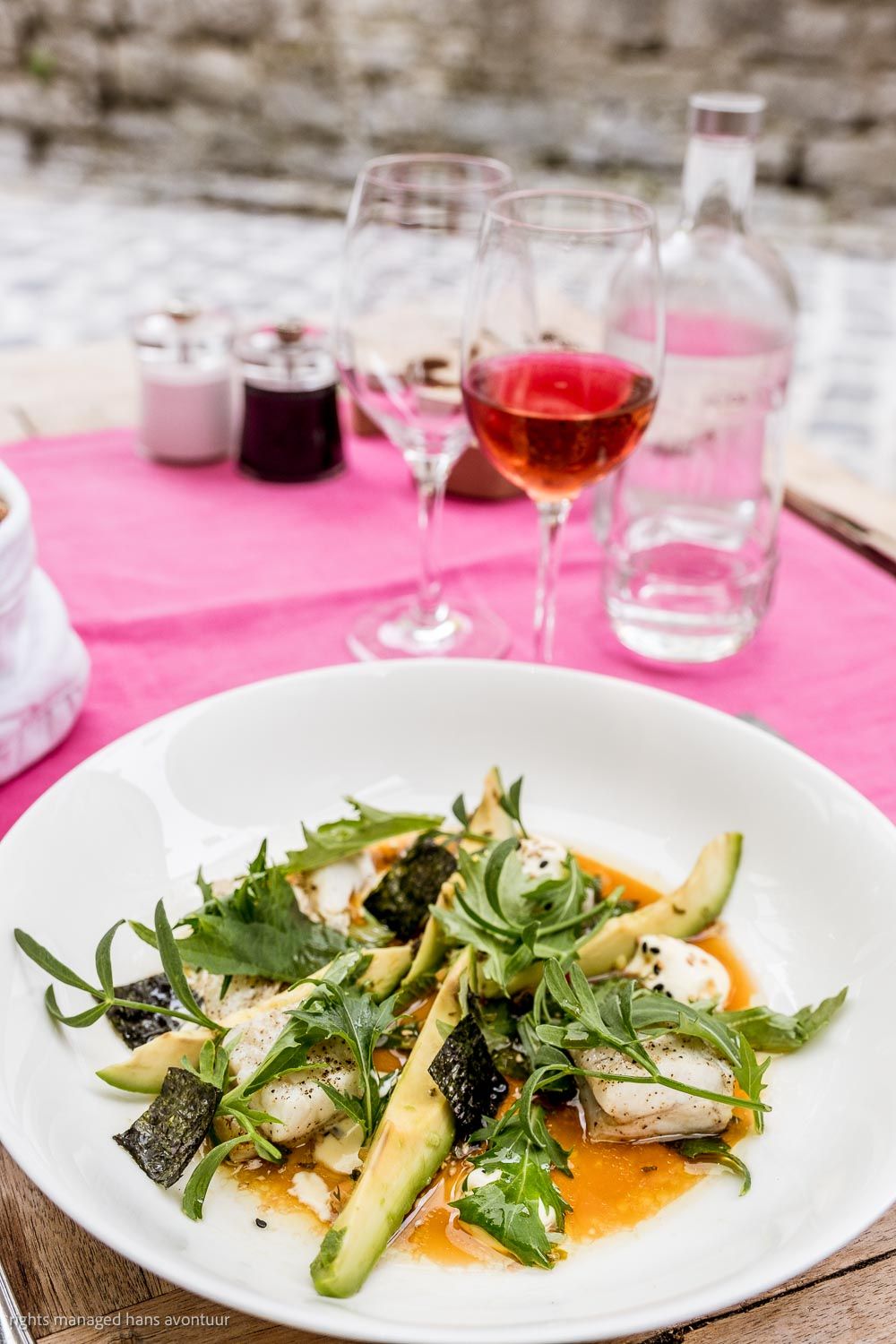
In the evening, I sit in a gold-lit alley at a table at Le Clos des Récollets, one of the top restaurants in the town. The menu makes your mouth water: sea bass just cooked in the flame, avocado and shiso, soy, yuzu and sesame cream, and cod and asparagus, potato and butter cremeux, wild garlic coulis and egg croquette.
While another nice glass of matching wine is being served, I take stock of the three stages. Which was the most beautiful? I come to the conclusion that this is the wrong question. It's precisely the sum that makes this cycling route so fantastic.
Love what we do? Help us keep sharing the world’s most inspiring travel stories. At WideOyster, we believe in adventure, authentic storytelling, and capturing the world – raw, real, and breathtaking.
We travel far and wide to bring you stunning photography, in-depth travel journalism, and immersive stories that inspire and inform. But this doesn’t come free. It takes time, passion, and resources to keep WideOyster running without paywalls or clickbait – just pure, high-quality travel content.
If you love what we do, please consider supporting us with a one-time contribution.
Click below to support us and be part of the adventure.
©WideOyster, 2026. Every journey we share is protected by copyright. Please explore and enjoy, but remember: all rights reserved.
WideOyster Media BV
Jacobsgasthuissteeg 11
Utrecht
The Netherlands
Just like every trip needs snacks, our website needs cookies to function. Accept our cookies and let the adventure begin! Read our Privacy Policy.